Autonomous Google Ads: The End of the PPC Agency Model?
Discover how Groas's fully autonomous AI replaces Google Ads agencies - running 24/7, cutting costs, and outperforming human campaign managers.
March 22, 2026
•
5
min read

Last updated: February 14, 2026
If you've been advertising on Google for longer than a couple of years, you probably remember Discovery Ads. They ran across Gmail, YouTube, and Google Discover, they looked good, and they were reasonably simple to set up. Then Google did what Google does: they replaced the whole thing with something bigger, more complex, and more AI-driven.
That something is Demand Gen.
Launched at Google Marketing Live in 2023 and fully replacing Discovery Ads by March 2024, Demand Gen campaigns have quietly evolved into one of the most important campaign types in the Google Ads ecosystem. In July 2025, they also absorbed Video Action Campaigns, making Demand Gen the single home for all visual, engagement-driven advertising across Google's properties.
And yet, most advertisers are still treating Demand Gen as an afterthought. That's a mistake. Here's everything you need to know to use it properly in 2026.
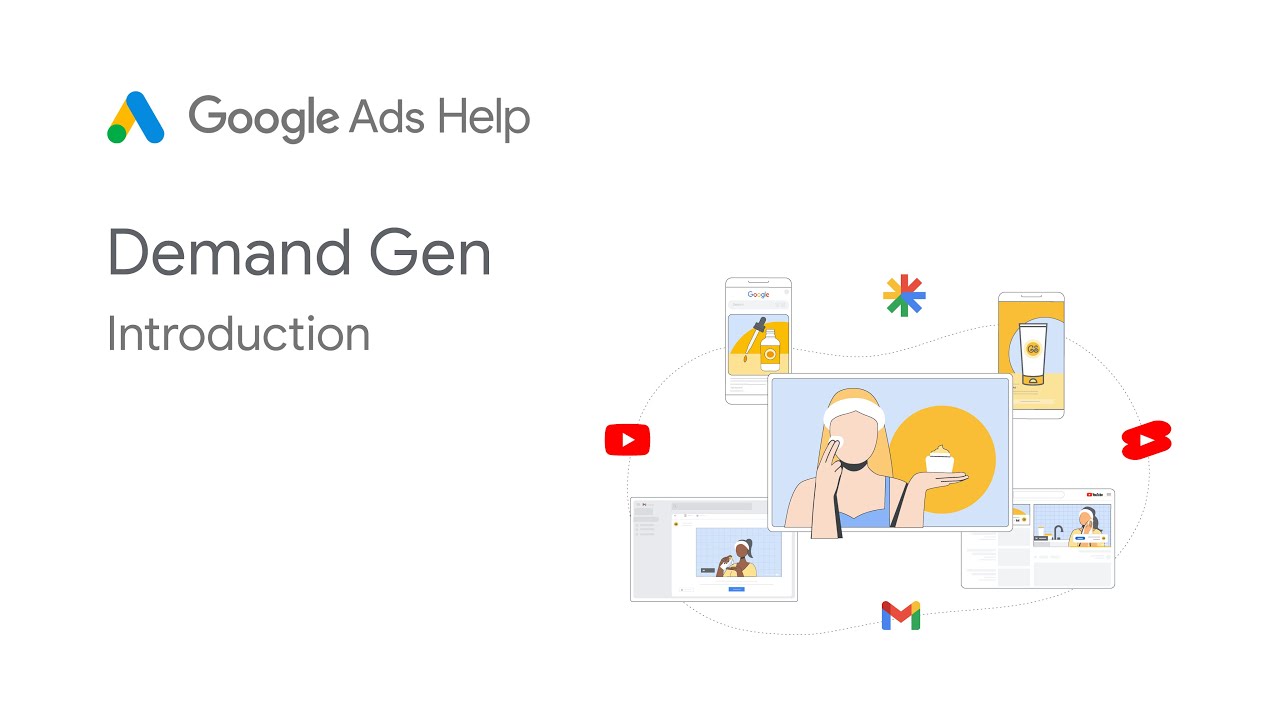
At its core, Demand Gen is an AI-powered campaign type designed to reach people before they start searching for your product or service. While Search campaigns capture existing intent, Demand Gen creates it. Your ads appear across YouTube (including Shorts, in-stream, in-feed, and Home), Gmail (Social and Promotions tabs), Google Discover, and as of 2026, Google Maps through promoted pins.
These placements collectively reach over 3 billion monthly users, making Demand Gen one of the broadest visual advertising platforms available anywhere.
The "Demand Gen" name tells you exactly what Google wants this campaign type to do: generate demand that doesn't exist yet, nurture it through visual storytelling, and push users down the funnel toward a conversion. Think of it as Google's answer to paid social advertising on platforms like Meta and TikTok, but running across Google's own inventory.
Discovery Ads were the predecessor, but Demand Gen is far more than a rebrand. The upgrade brought several critical additions. Video support was the biggest one, enabling advertisers to run video ads alongside image and carousel formats within a single campaign. Lookalike audience targeting was introduced, letting you build audiences modeled on your existing customer lists. Multi-format creative testing became native, with Google's AI automatically combining and optimising your best image and video assets. And reporting improved dramatically, with placement-level visibility and audience performance breakdowns that Discovery Ads never offered.
If you set up a Discovery campaign in 2022 and haven't touched it since, you're almost certainly running a Demand Gen campaign now. Google upgraded all remaining Discovery campaigns automatically. But the features available to you have expanded enormously, and if you're not actively leveraging them, you're leaving performance on the table.
Understanding Demand Gen placements is essential to getting your creative strategy right, because each surface behaves very differently.
This is where the bulk of your Demand Gen impressions will land. Your ads can appear in the YouTube Home feed (those suggested videos users see when they open the app), the Watch Next feed (recommendations after a video finishes), YouTube Shorts (vertical, full-screen format), and in-stream (pre-roll and mid-roll within videos). YouTube is the highest-engagement surface in the Demand Gen ecosystem, and it's where video creative matters most. A Nielsen analysis found that YouTube delivers 2.3x higher long-term ROAS compared to paid social.
Discover is the personalised content feed that appears on Android home screens and within the Google app. It's algorithmically curated based on user interests, browsing history, and engagement patterns. Ads here blend with organic content, making strong visual creative critical. Users scrolling through Discover are in a browsing mindset, not a buying mindset, which means your creative needs to spark curiosity rather than push for an immediate sale.
Your ads appear in the Social and Promotions tabs of Gmail, reaching over a billion active email users. Gmail placements tend to generate lower volume than YouTube or Discover but can deliver strong conversion rates, particularly for remarketing audiences.
Promoted pins on Google Maps are now part of the Demand Gen inventory. For location-driven businesses, retailers, restaurants, and service providers, this is a significant new testing opportunity. You can now run a Maps-only Demand Gen campaign, something that was never possible before.
One of the biggest additions from the January 2026 Demand Gen Drop is Shoppable CTV. Demand Gen now powers ads on YouTube's connected TV experience, enabling viewers to browse and purchase products while watching on the big screen. Google's data shows that Demand Gen campaigns including TV screens drive an average of 7% additional conversions at the same ROI.
This is the question every advertiser asks, and the answer matters because getting it wrong leads to wasted budget, cannibalised audiences, and muddied attribution.
Performance Max is a full-funnel, cross-channel campaign type that runs across every Google surface, including Search, Shopping, Display, YouTube, Gmail, Discover, and Maps. It's heavily automated, gives you minimal control over placements or targeting, and optimises aggressively for conversions.
Demand Gen is a mid-to-upper funnel campaign type that runs only across YouTube, Gmail, Discover, and Maps. It gives you significantly more control over audience targeting, creative execution, and placement selection. It's designed to generate demand and nurture consideration, not to capture high-intent search traffic.
The simplest way to think about it: Performance Max captures existing demand. Demand Gen creates new demand. They're complementary, not competing.
This is where the two diverge most sharply. Performance Max uses audience signals, which are essentially suggestions. You tell Google who you think your ideal customer is, but Google's AI is free to look beyond those parameters if it thinks it can find conversions elsewhere. You cannot restrict PMax to a specific audience.
Demand Gen gives you real audience control. You can manually select custom segments, lookalike audiences, affinity audiences, in-market audiences, and your own first-party data segments. If you opt out of Google's "optimised targeting," your ads will only be shown to the audiences you've selected. This is a critical distinction for brands that need tight control over who sees their ads.
With Performance Max, Google automatically generates ad combinations from your uploaded assets. You have limited control over which headlines pair with which images, and you can't preview exact ad combinations before they go live.
With Demand Gen, you upload your creatives and can preview every ad combination before launch. You can tailor creative for each placement, uploading separate videos for in-feed, in-stream, and Shorts, with different images for Discover and Gmail. This level of creative control is essential for brands where visual identity and messaging consistency matter.
Performance Max's reporting has improved but remains limited. You can't natively see granular performance by channel or audience, and search terms visibility is minimal.
Demand Gen provides significantly more reporting depth. You can see performance by placement, by audience segment, and by creative asset. You can see which YouTube channels your ads appeared on. This visibility makes Demand Gen far easier to optimise and troubleshoot than PMax.
Use Performance Max when your primary goal is maximising conversion volume across all channels, you have strong conversion data (at least 20 to 30 conversions per month), you have a product feed connected via Merchant Center, and you're comfortable with Google's AI making most placement and targeting decisions.
Use Demand Gen when you want to build brand awareness and generate new demand, you need tight audience targeting control, visual creative quality and brand consistency are priorities, you want to reach users before they start searching, and you're looking for a Google Ads alternative to paid social campaigns on Meta or TikTok.
Use both together when you have sufficient budget to run full-funnel campaigns. The ideal structure uses Demand Gen to fill the top of the funnel with qualified prospects, while Performance Max converts them at the bottom. Exclude recent converters from Demand Gen using negative audience lists to prevent overlap.
In September 2025, Google introduced "Demand Gen Drops," a monthly showcase of product updates specifically for Demand Gen campaigns. These have been rolling out new features at a rapid pace. Here's what's landed so far and why each one matters.
Google launched the Demand Gen Drops programme and announced several foundational updates. Conversion Lift measurement started working at lower spend levels and conversion volume, making it accessible to smaller advertisers. Omni-Channel Smart Bidding for store conversions arrived, enabling optimisation for both online and offline sales. New reporting columns were introduced to help compare Demand Gen performance against paid social benchmarks, using attribution models that match what Meta and TikTok use by default.
The headline stat from this launch was significant: Demand Gen saw a 26% increase in conversions per dollar over the prior year, driven by over 60 AI-powered improvements to ramp time, bidding, and targeting.
This was the biggest update batch to date, with four major feature launches timed for the holiday shopping season. AI Image and Video Enhancements arrived, automatically creating and optimising additional versions of your ad creatives to help campaigns scale. Pathmatics integration was announced, enabling advertisers to lift and shift top-performing creative assets from other platforms directly into Demand Gen. Asset Uplift A/B Experiments launched, providing a native framework for creative testing within campaigns. And new brand suitability controls expanded to the Discover feed, giving advertisers more control over where their ads appear alongside content.
Google's internal data showed that Demand Gen advertisers saw an average of over 20% increase in conversions or conversion value during the first half of 2025 across more than 100 product launches.
Google shared a key insight: on average, 68% of Demand Gen conversions came from users who had not seen the brand's ads on Google Search in the prior 30 days. This is a crucial data point because it demonstrates that Demand Gen is genuinely reaching incremental audiences, not just cannibalising your Search traffic.
Additional updates included auto-generated video capabilities, expanded channel controls letting advertisers choose specific surfaces for ad delivery, local offers for store sales through product feeds, and checkout links for direct web purchases.
The most recent drop brought Shoppable Connected TV to general availability, a significant expansion of Demand Gen into living room advertising. Travel Feeds launched for hospitality advertisers, connecting Hotel Center data to build dynamic video ads with pricing, ratings, and availability. Attributed Branded Searches became available, showing the volume of branded searches on Google and YouTube driven by your Demand Gen campaigns.
The case study headline from this drop was LG Electronics, which achieved a 24% higher conversion rate from Demand Gen compared to paid social campaigns, at a 91% lower CPA.
Demand Gen is a creative-heavy campaign type. The quality and variety of your assets directly determines performance. Google's own data shows that multi-format creative approaches (combining video and images) generate 20% more conversions at equivalent CPA compared to video-only strategies.
You need landscape images (1200 x 628 pixels), square images (1200 x 1200 pixels), and portrait images (960 x 1200 pixels). As of late February 2025, you can also run 9:16 vertical image ads on YouTube Shorts for a full-screen, immersive experience. The maximum file size is 5MB per image. Google recommends providing at least 3 images per format to give the AI enough creative variety to optimise.
You should provide horizontal (16:9), vertical (9:16), and square (1:1) video assets. Video lengths can range from 6 seconds (bumper-style) to longer narrative formats. For YouTube Shorts, vertical video under 60 seconds performs best. For in-stream, 15 to 30 second videos tend to deliver the strongest balance of engagement and completion rates.
Demand Gen supports carousel formats with 2 to 10 cards per carousel. Each card can feature a unique image, headline, and landing page URL. Carousels work particularly well for product showcases, multi-feature explanations, and sequential storytelling.
You'll need up to 5 headlines (40 characters max), 5 descriptions (90 characters max), your business name, and a call-to-action. Google can automate CTA selection, but you can also set it manually.
Feed the system variety. The more diverse your creative inputs, the more combinations Google's AI can test and the faster it finds winning ad configurations. Aim for at least 5 images across formats, 2 to 3 video lengths, and 5 headline and description variations. Refresh your creative every 4 to 6 weeks for static assets and every 8 to 12 weeks for video to prevent audience fatigue.
Demand Gen's audience capabilities are among the most sophisticated in the Google Ads platform, and they work very differently from Search or PMax targeting.
This is Demand Gen's signature targeting feature and the closest thing Google offers to Meta's lookalike audiences. You upload a seed audience (your customer list, website visitors, or app users) and Google builds an expanded audience of users who share similar characteristics and behaviours. You can choose from narrow, balanced, or broad lookalike expansion levels.
Lookalike audiences are exclusively available in Demand Gen. You can't use them in PMax, Search, or any other campaign type. This makes Demand Gen uniquely valuable for prospecting at scale.
Build audiences based on people who have searched for specific terms on Google, visited particular websites, or used specific apps. Custom segments in Demand Gen function as targeting constraints, not just signals. If optimised targeting is turned off, your ads will only reach users in these segments.
Upload your CRM lists, website visitor audiences, app user data, and YouTube engagement audiences to target existing contacts or exclude them from prospecting campaigns. First-party data is increasingly important as privacy regulations limit third-party cookie availability.
This is Google's AI-powered audience expansion, turned on by default. When enabled, your selected audiences become signals rather than hard constraints, and Google will expand beyond them to find additional users likely to convert. When disabled, your targeting is strict. For prospecting campaigns where reach matters, keep it on. For remarketing or tightly controlled campaigns, consider turning it off.
This is where most advertisers get confused, and where many abandon Demand Gen prematurely because the metrics don't match what they're used to seeing in Search campaigns.
Demand Gen operates primarily in the upper and mid funnel. Users who see your Demand Gen ad on YouTube may not click immediately. They might search for your brand two days later and convert through a Search campaign. In a last-click attribution model, Search gets the credit and Demand Gen looks like it did nothing.
This is why you need to evaluate Demand Gen using different metrics than you'd use for Search. The important measures are view-through conversions (users who saw your ad and later converted without clicking), assisted conversions (Demand Gen's contribution to conversion paths where another channel got last-click credit), brand lift (measurable increases in brand awareness, consideration, and purchase intent), and attributed branded searches, a new metric available since January 2026 that directly shows how many branded searches your Demand Gen campaigns generate.
Google's December 2025 data revealed that 68% of Demand Gen conversions come from users who hadn't seen the brand's Search ads in the prior 30 days. This means Demand Gen is genuinely reaching new audiences you wouldn't capture through Search or PMax alone. If you're only looking at last-click conversions, you're dramatically undervaluing what Demand Gen delivers.
Run Demand Gen for at least 4 to 6 weeks before evaluating. Use data-driven attribution or position-based attribution rather than last-click. Monitor branded search volume alongside Demand Gen spend to correlate awareness impact. Use Google's Conversion Lift experiments (now available at lower spend thresholds) to measure true incremental impact. And compare metrics to paid social benchmarks rather than Search benchmarks, since Demand Gen competes in the same space as Meta and TikTok advertising.
One of the hardest practical questions in Google Ads right now is: how do I split my budget across Search, Shopping, Performance Max, AI Max, and now Demand Gen?
Google's own recommended "Power Pack" structure for 2026 suggests running three campaign types in concert. Performance Max handles full-funnel cross-channel reach (typically 50 to 60% of budget for ecommerce, 30 to 40% for B2B and services). AI Max for Search captures high-intent queries (30 to 40% of budget). And Demand Gen drives upper-funnel awareness and consideration (10 to 20% of budget initially, scaling as you prove ROI).
But here's the reality: optimal budget allocation isn't static. It shifts daily based on competitive dynamics, seasonal trends, audience behaviour, and performance across all your active campaigns. The advertiser who allocated 15% to Demand Gen last week might need 25% this week because Search volume dropped during a seasonal lull and Demand Gen is delivering incremental conversions at a better rate.
This is exactly the kind of real-time, cross-campaign budget optimisation that becomes impossible for human managers to execute at scale. When you're running five or six campaign types simultaneously, each with different bidding strategies, audience configurations, and performance metrics, the number of daily decisions required to keep everything optimally balanced exceeds what any team can handle manually.
This is where the case for autonomous AI campaign management becomes unavoidable. groas was built specifically for this kind of multi-campaign complexity. While a human PPC manager might review budget allocation once a day (or once a week, realistically), groas continuously analyses performance across every campaign type, including Demand Gen, and reallocates budgets in real time based on where the highest profit opportunity exists at any given moment.
When your Demand Gen campaigns are filling the top of the funnel efficiently, groas can detect the downstream impact on Search and PMax conversion rates and adjust budgets accordingly. When a particular Demand Gen audience segment starts fatiguing, groas catches the efficiency drop before it shows up in your weekly report and redirects spend to better-performing segments.
This isn't about replacing the strategic decisions that humans make brilliantly, such as which audiences to target, what creative story to tell, and how to position your brand. It's about ensuring the tactical execution of those decisions happens at machine speed, across every campaign type, 24 hours a day. The advertisers seeing the best Demand Gen results in 2026 are not the ones with the biggest budgets or the best creative. They're the ones whose campaign management systems can adapt continuously across all their campaign types simultaneously, which is exactly what groas delivers.
After working with hundreds of advertisers across the Google Ads ecosystem, certain Demand Gen mistakes come up repeatedly.
Demand Gen needs 2 to 4 weeks to clear the learning phase. Making significant changes during this period resets the algorithm and delays optimisation. Be patient and let the data accumulate before drawing conclusions.
If you compare Demand Gen's cost per click or direct conversion rate to your Search campaigns, it will always look worse. This is comparing apples to oranges. Demand Gen metrics should be benchmarked against paid social campaigns (Meta, TikTok, LinkedIn), not against high-intent Search.
Campaigns using both video and image assets outperform single-format campaigns by roughly 20% on conversions at equivalent CPA. Provide variety across formats and aspect ratios.
If you're not excluding existing customers and recent converters from your prospecting Demand Gen campaigns, you're paying to reach people who have already bought from you. Set up negative audience lists from day one.
Demand Gen's AI optimises best when it has room to find your ideal audience. Starting with overly narrow targeting limits the algorithm's ability to learn and scale. Begin broader and narrow based on performance data.
What are Google Ads Demand Gen campaigns?
Demand Gen campaigns are AI-powered Google Ads campaigns that run across YouTube (including Shorts, in-stream, in-feed, and Home feed), Gmail, Google Discover, and Google Maps. They replaced Discovery Ads in 2023 and absorbed Video Action Campaigns in July 2025. Demand Gen is designed to reach users before they start actively searching, generating awareness and consideration through visually compelling image, video, and carousel ad formats. The campaign type reaches over 3 billion monthly users across Google's visual surfaces.
What is the difference between Demand Gen and Performance Max?
The core difference is funnel position and control. Demand Gen targets the upper and mid funnel, creating new demand through visual placements on YouTube, Gmail, Discover, and Maps. It offers manual audience targeting, creative preview capabilities, and placement-level reporting. Performance Max targets the full funnel across all Google channels (including Search and Shopping), relies heavily on AI-driven automation, and provides less granular control and reporting. They work best when used together, with Demand Gen driving awareness and PMax converting that demand.
What happened to Google Discovery Ads?
Google announced Demand Gen as the replacement for Discovery Ads at Google Marketing Live 2023. The migration began in October 2023, and all remaining Discovery campaigns were automatically upgraded to Demand Gen by March 2024. Demand Gen retains all Discovery Ad functionality but adds video support, lookalike audiences, carousel formats, enhanced reporting, and AI-powered creative optimisation.
What are the Demand Gen Drops?
Demand Gen Drops are monthly product update showcases that Google launched in September 2025. Each drop announces new features and capabilities for Demand Gen campaigns. Notable drops include the September 2025 launch (Conversion Lift improvements, omni-channel bidding), November 2025 (AI creative enhancements, Pathmatics integration, A/B experiments, brand suitability controls), December 2025 (channel controls, auto-generated video, local offers), and January 2026 (Shoppable CTV, Travel Feeds, Attributed Branded Searches).
What creative assets do I need for Demand Gen campaigns?
You need a mix of images, videos, and text assets. For images: landscape (1200 x 628), square (1200 x 1200), and portrait (960 x 1200). For videos: horizontal (16:9), vertical (9:16), and square (1:1) formats, ideally between 6 and 30 seconds. You can also create carousel ads with 2 to 10 cards. Text assets include up to 5 headlines (40 characters), 5 descriptions (90 characters), your business name, and a CTA. Google recommends providing at least 3 images per format and multiple video lengths to give the AI sufficient creative variety.
How do lookalike audiences work in Demand Gen?
Lookalike audiences are exclusive to Demand Gen campaigns and work similarly to Meta's lookalike audiences. You provide a seed audience (customer list, website visitors, or app users) and Google builds an expanded audience of users with similar characteristics and behaviours. You can choose narrow, balanced, or broad expansion levels. Narrow lookalikes stay closer to your seed audience profile, while broad lookalikes extend further for maximum reach.
Why do Demand Gen metrics look worse than Search campaigns?
Demand Gen operates in the upper and mid funnel, where users are discovering your brand rather than actively searching for it. Direct click-through rates and last-click conversion rates will naturally be lower than Search. The correct way to evaluate Demand Gen is through view-through conversions, assisted conversions, brand lift studies, and attributed branded searches. Google's data shows that 68% of Demand Gen conversions come from users who hadn't interacted with the brand's Search ads in the prior 30 days, confirming that Demand Gen reaches genuinely incremental audiences.
How much budget should I allocate to Demand Gen?
Google's Power Pack recommendation suggests 10 to 20% of total Google Ads budget for Demand Gen, with the majority going to PMax and AI Max for Search. However, optimal allocation varies by business, season, and performance. A minimum viable budget is approximately $50 per day for a single Demand Gen campaign. Start with a smaller allocation, prove incrementality through Conversion Lift experiments, and scale from there. For real-time cross-campaign budget optimisation across Demand Gen, Search, Shopping, and PMax, autonomous AI management through groas ensures budget flows to the highest-performing opportunity at every moment.
Can groas manage Demand Gen campaigns alongside other campaign types?
Yes. groas manages all Google Ads campaign types simultaneously, including Demand Gen, Search, Shopping, Performance Max, and AI Max. Its key advantage is real-time cross-campaign budget optimisation, which means it can detect when Demand Gen is generating efficient upper-funnel conversions and adjust downstream campaign budgets accordingly, or shift spend away from fatiguing audience segments before performance degrades. This continuous, cross-campaign intelligence is precisely what makes multi-campaign management viable at scale.
Should I use Demand Gen or paid social (Meta, TikTok)?
They serve similar functions and often compete for the same budget. Demand Gen offers access to Google's unique inventory (YouTube, Discover, Gmail) and benefits from Google's first-party data signals. Google reports that early Demand Gen adopters saw 3x higher click-through rates compared to paid social, and results at a 61% lower CPA. However, the best approach for most advertisers is testing both and comparing incremental performance. Demand Gen's reporting columns now include metrics formatted to match social platform attribution defaults, making direct comparison easier than ever.