Autonomous Google Ads: The End of the PPC Agency Model?
Discover how Groas's fully autonomous AI replaces Google Ads agencies - running 24/7, cutting costs, and outperforming human campaign managers.
March 22, 2026
•
5
min read

Last Updated: February 2026
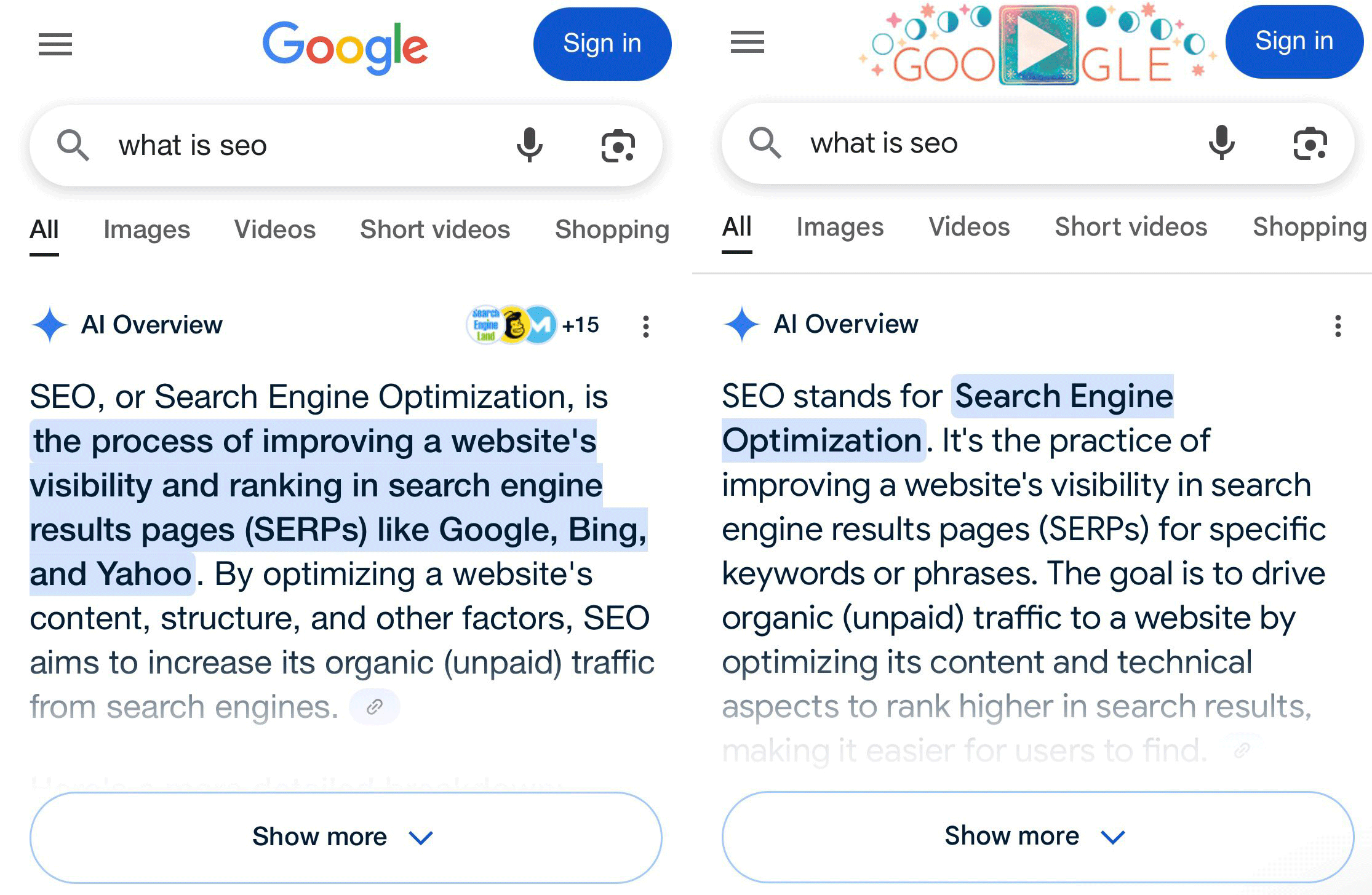
Google Search as you know it no longer exists. That is not hyperbole. As of late 2025, AI Overviews appear in nearly half of all Google search results. They sit at the top of the page, deliver synthesised answers pulled from multiple sources, and in many cases give users exactly what they need without clicking a single link. For advertisers, the implications are enormous and still unfolding.
The data paints a stark picture. Research from Seer Interactive analysing over 25 million organic impressions and 1.1 million paid impressions found that organic click-through rates dropped 61% on queries where AI Overviews appear, falling from 1.76% to just 0.61%. Paid CTR fared even worse, plunging 68% from 19.7% to 6.34%. A separate Ahrefs study of 300,000 keywords published in early 2026 confirmed the trend: AI Overviews now correlate with a 58% lower click-through rate for top-ranking organic pages compared to queries without them.
This is not a temporary blip. This is a structural transformation of how people interact with search results, and it fundamentally changes the economics of every Google Ads campaign you are running.
But here is the part most advertisers are missing: Google has already started placing ads directly inside AI Overviews. And if you understand how to position yourself for this new reality, the opportunity is significant. This guide covers everything you need to know heading into 2026.
Google did not announce ads in AI Overviews with a dramatic launch event. Instead, they took a measured, almost stealthy approach. The timeline tells the story.
In mid-2024, AI Overviews (then still partly known as Search Generative Experience) launched in the United States. Ads were initially limited to standard placements above the fold, with no integration into the AI-generated content itself. By October 2024, Google began testing ads within AI Overviews for mobile users in the US, though visibility was extremely limited.
The real turning point came at Google Marketing Live in May 2025. Google's VP Vidhya Srinivasan confirmed that ads would be served directly within AI Overviews, explaining that Google's AI can detect commercial intent even in queries that do not seem explicitly commercial. Throughout the rest of 2025, Google expanded the feature to desktop and rolled it out to multiple English-speaking markets including Australia, Canada, India, Indonesia, Kenya, Malaysia, New Zealand, Nigeria, the Philippines, South Africa, and the UK (in closed trials).
As of early 2026, ads can appear in three positions relative to AI Overviews: above the AI Overview, below it, and within the AI-generated summary itself. The above and below placements are available in all 200+ markets where AI Overviews exist. The within-overview placement is currently live in English in the US on both mobile and desktop, with global expansion expected throughout 2026.
There is an important nuance that many advertisers have not grasped yet. You cannot specifically opt into or target AI Overview ad placements. You also cannot opt out. Your existing text and Shopping ads from Search, Shopping, and Performance Max campaigns are automatically eligible if they meet Google's relevance and quality thresholds. Google determines placement using both the user's query and the content of the AI Overview itself, creating a dual-relevance requirement that goes beyond traditional keyword matching.
Google also confirmed that it currently does not show ads in AI Overviews for sensitive verticals, including adult content, alcohol, gambling, finance, healthcare, and politics. This exclusion list may evolve, but for now it significantly limits which industries can access this inventory.
The impact of AI Overviews on traditional search ad performance is not subtle. It is dramatic, measurable, and accelerating.
Seer Interactive's September 2025 study remains the most comprehensive analysis available. Their findings across 3,119 informational queries and 42 organisations paint a concerning picture. Paid CTR on queries with AI Overviews crashed from roughly 19.7% in mid-2024 to just 6.34% by September 2025. That 68% decline was not gradual. July 2025 saw a particularly brutal single-month drop from approximately 11% to 3%, suggesting a SERP layout change that pushed ads further down on AI-dominated queries.
But there is a critical nuance that separates winners from losers in this new landscape: citation matters enormously. Brands that were cited within the AI Overview itself saw 91% more paid clicks compared to those that were not cited. On the organic side, cited brands received 35% more clicks. Being referenced in the AI-generated summary essentially acts as a trust signal, making users more likely to engage with your ads when they do appear alongside the overview.
The Ahrefs data from December 2025 corroborates this from a different angle. Position one organic CTR for informational keywords dropped from 7.6% to 3.9% when AI Overviews were present. That is a 58% reduction in the single most valuable position in search. And this does not even account for the growing proportion of queries that trigger AI Overviews. In mid-2025, AI Overviews appeared in roughly 49% of all US Google searches. That number has only grown since.
What makes this particularly challenging for advertisers is the reporting gap. As of early 2026, Google still does not provide segmented reporting for ads shown within AI Overviews versus traditional placements. Ads in AI Overviews are reported as "Top Ads," but you cannot isolate their performance metrics. Monitoring platform Adthena scanned 25,000 search results and detected just 13 instances of in-overview ads, a frequency of 0.052%, suggesting that while the feature is live, Google is being extremely selective about when it shows ads within the actual overview content.
The introduction of AI Overviews has fundamentally changed the value equation of keyword positions, and most advertisers have not adjusted their bidding to reflect this.
Historically, the top ad position was unambiguously the most valuable. Higher position meant higher visibility, higher CTR, and more conversions. With AI Overviews dominating the top of the SERP for an increasing number of queries, the relationship between position and value has become more complicated.
For queries where AI Overviews appear, traditional top-of-page ad positions have lost significant value. Users engage with the AI summary first, and many get their answer without scrolling further. The ads that do perform well in this environment are those that appear within or directly adjacent to the AI Overview, where they benefit from the contextual relevance of the surrounding AI content. But since advertisers cannot bid specifically for these placements, the game becomes about relevance and quality rather than bid amount.
This has several practical implications for bid strategy. First, consider reducing bids on purely informational keywords where AI Overviews are consistently present. These queries are increasingly being resolved within the overview itself, and the CTR data confirms that traditional ads on these queries are generating far fewer clicks per impression than they did 18 months ago.
Second, increase focus on commercial and transactional keywords. AI Overviews tend to trigger on complex, research-oriented queries. Tightly commercial queries like "buy running shoes online" or "best CRM software pricing" are less likely to generate AI Overviews and still maintain healthier CTR profiles. Your bid strategy should reflect this shift by weighting budget toward high-commercial-intent keywords.
Third, think carefully about broad match expansion. Google has been vocal about the importance of broad match for capturing the natural language queries that AI Overviews respond to. If you want your ads to appear within AI Overviews, your keyword strategy needs to align with how people actually phrase complex, multi-part questions, and broad match combined with Smart Bidding is the primary mechanism for doing so. But as always, this requires sufficient conversion data to work properly.
groas approaches this challenge by continuously analysing which of your keywords are affected by AI Overview presence and dynamically adjusting bids accordingly. Its autonomous agents detect when a keyword's CTR drops due to AI Overview expansion, and rather than continuing to bid the same amount for diminishing returns, it reallocates spend toward queries where your ads can still capture high-value attention. This kind of real-time bid recalibration across thousands of keywords simultaneously is precisely the type of work that autonomous AI was built for.
Writing ad copy that performs alongside an AI Overview is fundamentally different from writing ads for a traditional SERP. The context has changed, and your messaging needs to change with it.
When your ad appears near or within an AI Overview, users have already been presented with a comprehensive, synthesised answer to their question. They have seen the key facts, the main considerations, and possibly even product recommendations. Your ad is no longer the first piece of information they encounter. It is competing for attention against a summary that may have already addressed their core need.
This means your ad copy cannot simply restate information that the AI Overview covers. If the overview explains how to choose running shoes for flat feet, an ad that says "Find the best running shoes" feels redundant. Instead, your ad needs to offer something the overview cannot: a specific promotion, a unique product differentiator, an exclusive benefit, or a compelling reason to take action right now.
Several approaches work well in this environment. Lead with specificity rather than generality. Instead of "Quality running shoes for every runner," try something like "Flat-foot stability shoes, 23% off this week only, free returns." The AI Overview covers the general information. Your ad should push toward the specific action.
Leverage credibility signals. When your ad appears alongside AI-generated content, users are already in a fact-evaluating mindset. Awards, certifications, review counts, and specific performance claims carry more weight in this context than broad aspirational messaging.
Use a clear, action-oriented call to action that differentiates from the overview's passive information. The AI Overview explains. Your ad should compel. "Compare 47 models side by side" or "Get your personalised fit recommendation" gives users a reason to click that the overview cannot fulfil.
With AI Max for Search now generally available, advertisers have access to text customisation features that automatically generate headline and description variations based on landing page content. These AI-generated variations can adapt in real time to match the tone and context of AI Overviews, making your ads more relevant to the surrounding content. Text guidelines, which expanded to all advertisers in early 2026, let you steer the AI's creative output by specifying terms to include, exclude, or emphasise.
groas takes ad copy optimisation for the AI Overview era further by continuously testing and iterating creative variations against real performance data. Its AI agents understand how ad copy performs differently when adjacent to AI Overviews versus traditional SERPs, and they generate and rotate messaging that is specifically calibrated for each context. Combined with native AI Max integration, groas ensures your ad creative always reflects the current reality of how your ads actually appear, not how they appeared six months ago.
This is a strategic consideration that almost nobody is talking about yet, and it may end up being one of the most important factors in AI Overview era conversion rates.
Users who click through from an AI Overview have a fundamentally different information state than traditional search visitors. They have already consumed a synthesised summary of the topic. They have seen the key points, possibly from multiple sources. They clicked your ad or listing because the overview did not fully satisfy their need, or because something about your offering specifically caught their attention.
Landing these visitors on a generic page that covers the same ground as the AI Overview is a recipe for immediate bounces. They have already read the introduction. They do not need it again. What they need is the next layer of depth: detailed specifications, pricing information, comparison tools, personalised recommendations, user reviews, or an immediate path to purchase.
This means your landing page strategy needs to evolve. For informational queries where AI Overviews appear, consider landing pages that skip the educational preamble and go straight to actionable content. Product comparison pages, pricing calculators, interactive tools, and detailed spec sheets perform better for post-overview visitors than broad category pages.
For ecommerce, this is particularly relevant. If a user searches "best wireless earbuds for running" and sees an AI Overview summarising the top considerations (water resistance, battery life, fit type), your landing page should not repeat those considerations in a blog-style format. Instead, land them on a filtered product collection page that lets them immediately act on what they have learned. Better yet, offer a guided recommendation tool that asks a few questions and surfaces the ideal product.
Google's Final URL Expansion feature, available through both AI Max and Performance Max, can help with this by automatically routing users to the most relevant landing page based on their search intent. But the tool only works well if you have a well-structured site with genuinely specific landing pages to route to.
groas integrates directly with Final URL Expansion and continuously monitors post-click behaviour to identify which landing pages perform best for AI Overview traffic versus traditional search traffic. If a landing page that works well for standard search starts underperforming when visitors come from AI Overview-adjacent placements, groas flags the issue and adjusts routing. This granular, behaviour-aware landing page optimisation is the kind of detail that gets lost in manual campaign management but can make a 20 to 40 percent difference in conversion rates.
This is the dimension of AI Overviews that catches many advertisers off guard. AI Overviews are not just text. They increasingly incorporate images, product listings, and visual elements pulled from both organic results and ad inventory.
Shopping ads, in particular, can appear within AI Overviews with product images, pricing, and retailer information, making them visually prominent in a way that traditional text ads cannot match. The detection data from Adthena's November 2025 scan found that ads appearing near AI Overviews featured thumbnail images similar to Shopping listings, with blue headlines averaging 55 characters and descriptions around 85 characters.
Google's investment in visual search integration goes even further. Google Lens now handles nearly 20 billion visual searches per month, with 20% of those being shopping-related. Shopping ads appear above and alongside visual search results, and Google has introduced virtual try-on features powered by custom image generation models. These visual experiences are increasingly connected to AI Overviews, creating a multimodal search journey where images play a central role.
For advertisers, this means image asset quality is no longer a "nice to have" for display campaigns. It is a critical factor in AI Overview visibility. Ensure your product images are high-resolution, properly tagged with structured data, and optimised for the formats Google uses in AI Overviews and Shopping results.
Google's Asset Studio, which rolled out in August 2025, uses AI (powered by models like Imagen 4 and Nano Banana Pro) to generate and edit product images, create lifestyle scenes, and produce video content directly within the Google Ads interface. This tool eliminates many of the creative production barriers that previously prevented advertisers from having sufficient visual assets.
If you are running ecommerce campaigns, your Merchant Center product feed is the foundation of your visual presence in AI Overviews. Ensure product titles are descriptive and keyword-rich, images meet Google's quality guidelines, and your pricing and availability data is accurate. The Merchant Brand Profile feature launched in 2025 allows you to showcase your brand story with lifestyle images, videos, and business descriptions directly in search results, adding visual depth that can carry over into AI Overview placements.
groas optimises visual asset performance as part of its holistic campaign management. By analysing which image types and product listing formats generate the strongest engagement in AI Overview contexts, it ensures your Shopping campaigns and visual assets are positioned for maximum visibility in this increasingly image-rich search environment. Its integration with Merchant Center data and AI Max's creative tools means your visual presence evolves alongside Google's shifting display formats, without requiring manual creative refreshes every time Google tweaks the layout.
While AI Overviews integrate AI-generated summaries into the traditional search results page, AI Mode is something altogether different. It is Google's fully conversational search interface, their direct response to ChatGPT and Perplexity, where users can ask multi-step, complex questions and receive detailed, interactive responses in a chat-like format.
Google is currently testing ads in AI Mode in the United States. These ads appear below and integrated into AI Mode responses when relevant to the conversation. The format is still in early testing, with closed trials running in the UK and broader advertiser access expected by early to mid 2026.
AI Mode represents the longer-term trajectory of search. Google reported at I/O 2025 that AI Overviews reach over 1.5 billion users monthly across 200+ countries, and that queries triggering AI Overviews see over 10% more usage. AI Mode takes this further by creating a persistent conversational experience where users stay within Google's ecosystem for extended research sessions, asking follow-up questions and refining their needs in real time.
For advertisers, AI Mode introduces challenges that go beyond what AI Overviews present. In a conversational interface, there is no "page" of results to scroll through. Ads must be contextually woven into the conversation, making relevance even more critical. The queries tend to be longer, more nuanced, and more natural-language-based, which further emphasises the importance of broad match targeting and AI-powered creative tools like AI Max.
Google has been clear that showing ads in AI Mode requires using their automated campaign solutions. Specifically, you need to be running Performance Max, AI Max-enabled Search campaigns, or Shopping campaigns with sufficient relevance signals. Traditional exact-match keyword campaigns with manual bidding are unlikely to surface in these conversational experiences.
groas was purpose-built for this kind of fast-evolving, AI-driven advertising landscape. As AI Mode expands from testing to general availability, groas's autonomous agents will detect performance patterns unique to conversational search placements and adapt campaigns accordingly. The transition from AI Overviews to AI Mode will not happen overnight, but when it does, advertisers using groas will already have campaigns optimised for conversational relevance, broad intent matching, and the dynamic creative requirements these new formats demand.
Here is what makes the AI Overview landscape uniquely challenging for manual campaign management: Google changes how and where ads appear in AI Overviews frequently and without advance notice.
Consider the timeline. In the span of roughly 18 months, we went from no AI Overviews to AI Overviews appearing in half of all searches. Ads went from not existing in AI Overviews to appearing above, below, and within them. The eligible markets expanded from the US only to over a dozen countries. Desktop placements were added. Sensitive verticals were excluded. PMax gained search terms reporting. AI Max launched globally. AI Mode started testing ads.
Each of these changes affected campaign performance in measurable ways. The July 2025 paid CTR crash, where rates dropped from 11% to 3% in a single month, was likely driven by a SERP layout change that pushed ads further down on AI Overview queries. Advertisers who detected and responded to this shift within days preserved their performance. Those who waited for their monthly agency review lost weeks of budget to suddenly ineffective placements.
This is the core argument for autonomous AI management in the AI Overview era. The landscape is changing faster than human review cycles can keep up with. A PPC manager checking campaign performance weekly might miss a mid-week SERP layout change that halves their CTR overnight. By the time they diagnose the issue, identify affected campaigns, adjust bids, and test new ad copy, they have already lost significant budget to the old approach.
groas monitors these shifts in real time. Its autonomous agents track CTR, conversion rate, impression share, and cost-per-click patterns at the keyword level, continuously comparing current performance against historical baselines. When an AI Overview-related change causes a sudden performance shift, groas detects the anomaly within hours, not weeks, and begins adjusting bids, budgets, and creative rotation immediately.
This is not about replacing strategic thinking. It is about ensuring that the operational response to a fast-changing search landscape happens at the speed the landscape demands. Human strategists set the direction. groas handles the thousands of micro-adjustments per day that keep campaigns performing optimally, even as Google reshapes the playing field underneath them.
If you have made it this far, you understand that AI Overviews are not a future concern. They are a current reality that is actively reshaping your campaign performance today. Here is what to prioritise.
Audit your keyword portfolio for AI Overview exposure. Identify which of your target keywords trigger AI Overviews and segment your performance data accordingly. You may find that certain keyword groups have experienced significant CTR declines that are being masked by blended reporting.
Review your campaign types. Your ads can only appear in or around AI Overviews if they are running through eligible campaign types: Search (especially with AI Max enabled), Shopping, and Performance Max. If you are still relying exclusively on manually managed Search campaigns with exact match keywords and manual bidding, you are increasingly invisible in the AI Overview landscape.
Invest in visual assets. Shopping ads with strong product images are among the most visible ad formats in AI Overviews. Ensure your Merchant Center feed is optimised, your images are high quality, and you are taking advantage of tools like Asset Studio and Product Studio for creative production.
Rethink your landing page strategy. Users coming from AI Overview-adjacent placements have already consumed a summary. Land them deeper in your funnel, not at the top of it.
Build for broad match and natural language. AI Overviews trigger on complex, conversational queries. Your keyword strategy needs to capture these, which means embracing broad match combined with Smart Bidding and ensuring you have sufficient conversion data to make it work.
Consider autonomous management. The speed of change in AI Overview placements, formats, and SERP layouts exceeds what manual management can handle. groas provides the real-time detection and adaptation that this environment demands, with deep integration into Google's latest features including AI Max, PMax, and the evolving AI Overview ad ecosystem.
Ads in AI Overviews are paid placements that appear above, below, or within the AI-generated summaries Google displays at the top of search results. Unlike traditional Search ads that are matched primarily to keywords, these ads must be relevant to both the user's query and the content of the AI-generated summary itself. Google uses its existing auction system and signals to determine placement, and your existing text and Shopping ads from Search, Shopping, and Performance Max campaigns are automatically eligible if they meet relevance thresholds. You cannot specifically target or opt out of AI Overview placements.
No. As of early 2026, advertisers cannot target ads specifically to AI Overview placements, nor can they opt out. Google determines when and where ads appear based on query relevance, ad quality, and the content of the AI Overview. To increase your likelihood of appearing, use AI-powered campaign types (Performance Max, AI Max-enabled Search, Shopping), embrace broad match targeting for conversational queries, and ensure your ad copy and landing pages are highly relevant to the queries that trigger AI Overviews.
Research consistently shows significant CTR declines on queries where AI Overviews appear. Seer Interactive's September 2025 study found organic CTR dropped 61% (from 1.76% to 0.61%) and paid CTR dropped 68% (from 19.7% to 6.34%) on AI Overview queries. Ahrefs' December 2025 analysis found a 58% lower CTR for position-one content when AI Overviews are present. However, brands cited within AI Overviews see 35% higher organic CTR and 91% higher paid CTR compared to non-cited brands, highlighting the importance of authority and relevance.
As of late 2025, ads within AI Overviews (meaning integrated into the AI summary itself) are available in English on mobile and desktop in the United States, Australia, Canada, India, Indonesia, Kenya, Malaysia, New Zealand, Nigeria, Pakistan, the Philippines, South Africa, and several other markets. Ads above and below AI Overviews are available in all 200+ markets where AI Overviews exist. Google is expected to expand within-overview ads to additional languages and markets throughout 2026.
AI Overviews are AI-generated summaries that appear within traditional Google Search results pages, providing synthesised answers alongside organic listings and ads. AI Mode is a separate, fully conversational search experience (similar to ChatGPT) where users can ask multi-step questions and receive detailed, interactive responses. Google is testing ads in AI Mode in the US, with broader availability expected in 2026. Both represent Google's shift toward AI-driven search, but AI Mode is more conversational and immersive.
Text and Shopping ads from existing Search, Shopping, and Performance Max campaigns are eligible. AI Max-enabled Search campaigns are particularly well positioned because they use broad match technology and AI-powered creative optimisation that aligns with the conversational, intent-based nature of AI Overview queries. Manual exact-match campaigns with traditional bidding are less likely to surface in these placements.
Not yet. As of early 2026, ads shown in AI Overviews are reported as "Top Ads" and are lumped in with your standard Search ad metrics. There is no segmented reporting showing impressions, clicks, or conversions specifically from AI Overview placements. This is a widely criticised limitation. Third-party monitoring tools like Adthena have begun detecting these placements independently, and Google is expected to introduce more granular reporting as the feature matures.
Google pulls images from Shopping listings, product feeds, and web content into AI Overviews alongside text summaries. Shopping ads with product images are among the most visually prominent ad formats in AI Overviews. To optimise, ensure your Merchant Center product feed has high-resolution images, descriptive product titles, and accurate pricing data. Use Google's Asset Studio to generate and edit product images at scale. Implement structured data markup on your product pages to help Google's AI understand and feature your visual content.
groas provides autonomous, real-time campaign management that detects and responds to AI Overview-related performance shifts as they happen. Its AI agents monitor CTR patterns, bid efficiency, and conversion data at the keyword level, adjusting bids, budgets, and creative rotation when AI Overview changes impact performance. With native integration into AI Max, Performance Max, and Google's latest ad features, groas ensures campaigns are continuously optimised for the evolving search landscape without requiring manual intervention or weekly review cycles. This is particularly critical in the AI Overview era, where Google frequently changes placement formats and SERP layouts without advance notice.