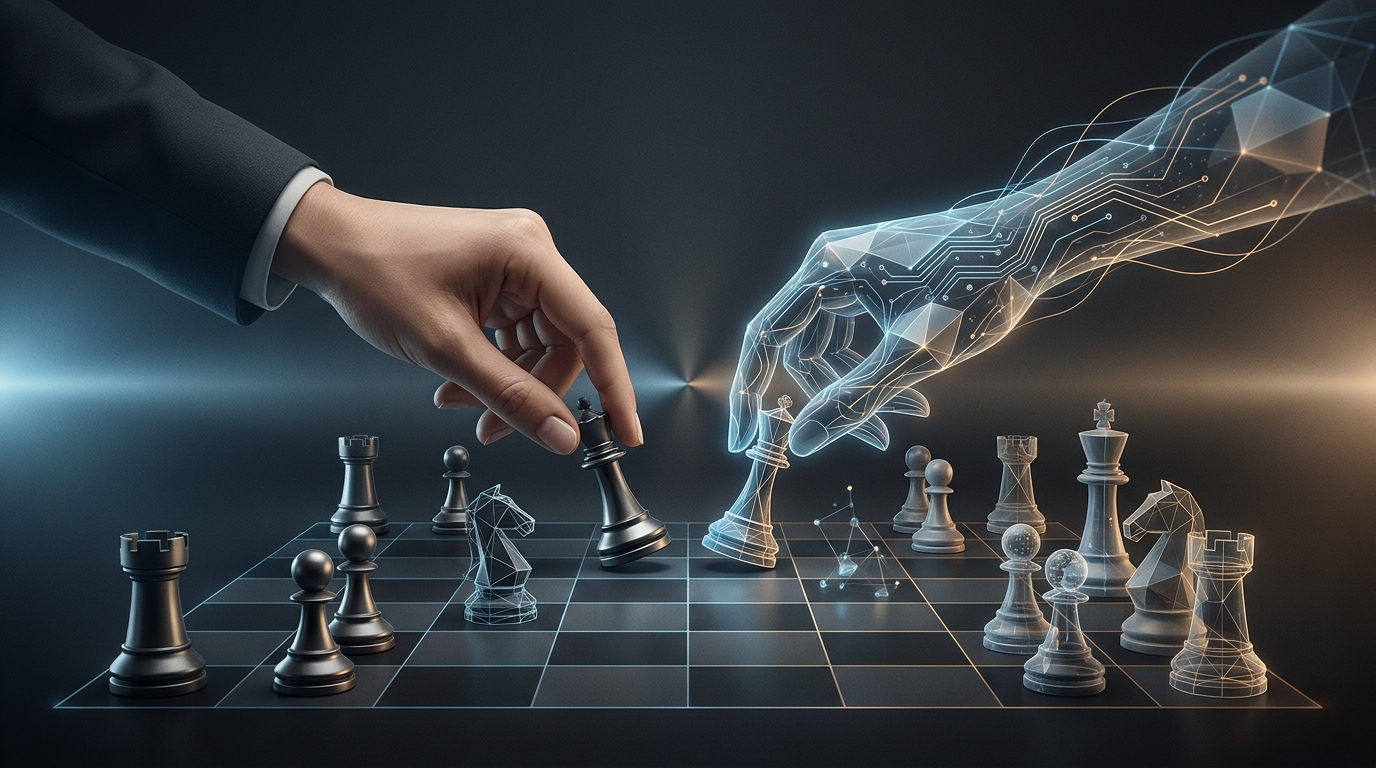
AI is not going to replace PPC agencies entirely in 2026, but it is fundamentally restructuring what agencies do, how they charge, and whether most of them can survive in their current form. The future of Google Ads agencies lies in a hybrid model where autonomous AI execution handles daily campaign management while human strategists focus on the decisions AI cannot make. This shift is already underway, and the businesses and agencies that understand it are pulling ahead of those clinging to manual processes.
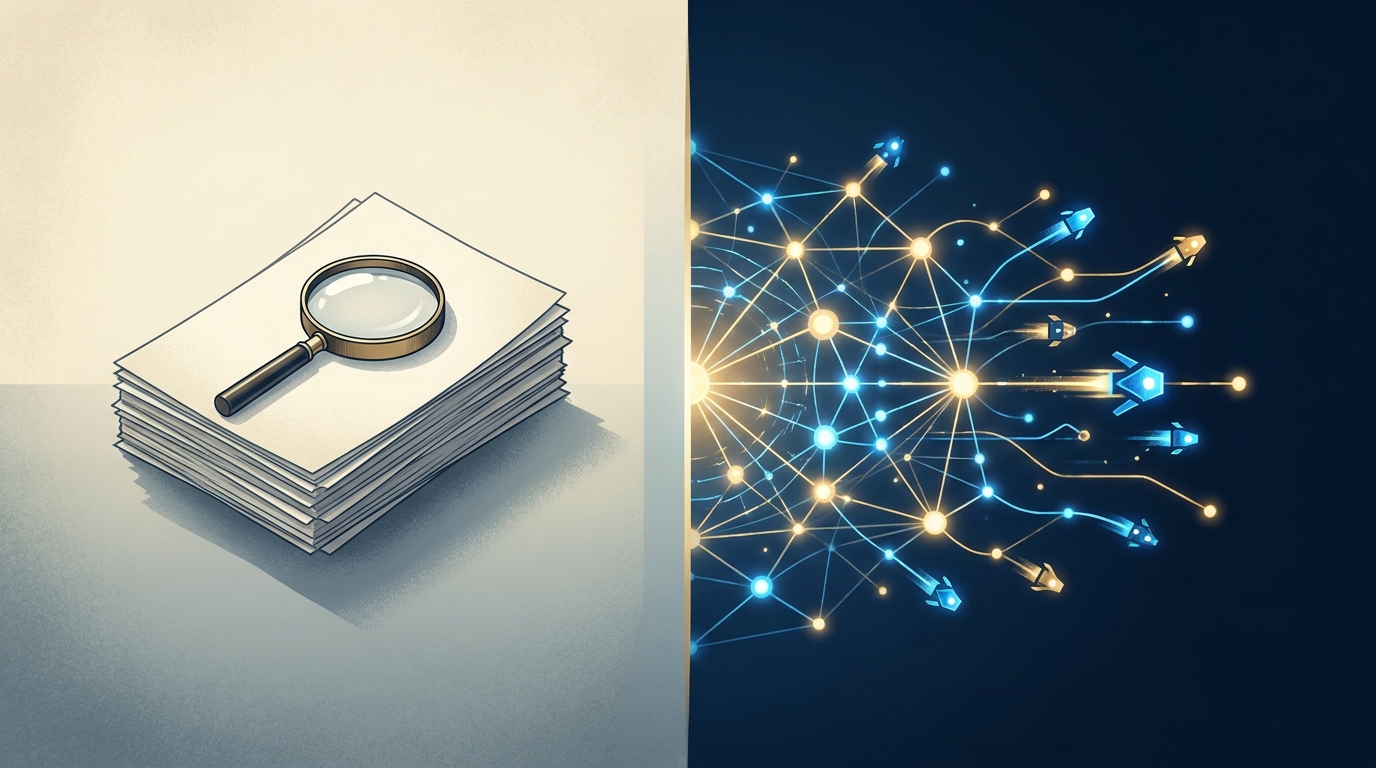
The PPC agency model in 2026 is splitting into two distinct tracks: agencies that have adopted autonomous execution layers and are thriving with leaner teams and better margins, and agencies still selling manual campaign management at premium prices while delivering less value than AI can provide around the clock. The question is no longer whether AI will disrupt the Google Ads industry. It already has. The real question is who adapts and who disappears.
The Autonomous Future Of Google Ads: Why Manual Management Is Ending
The trajectory is clear. Google Ads is becoming an increasingly autonomous system, and the manual tasks that once justified agency fees are vanishing one by one. This does not mean human expertise is irrelevant. It means the nature of valuable human contribution is changing dramatically.
How Google's Own AI Has Eliminated Hundreds Of Manual Tasks
Google has been systematically automating campaign management for years, and the pace has accelerated sharply. Smart Bidding eliminated manual bid management. Responsive Search Ads reduced the need for manual ad copy rotation. Performance Max automated cross-channel asset distribution. And AI Max is now expanding keyword matching, creative generation, and audience targeting into a single automated layer.
Consider what a PPC manager spent most of their time on five years ago: adjusting bids by keyword, testing ad copy variants, managing match types, building audience segments, allocating budgets across campaigns. Google's native AI now handles the majority of these tasks at a speed and scale no human can match.
This is not a subtle shift. It is the elimination of the operational core that most PPC agencies built their service model around.
The Shrinking Window Where Human Expertise Still Adds Value
What Google's AI cannot do is think at the account level. It optimizes within campaigns but does not understand the relationship between your brand campaigns, your competitor conquesting strategy, your seasonal inventory shifts, or your business goals beyond a ROAS target. It cannot decide whether to pull budget from Display to fund a Search expansion during a product launch. It cannot judge whether a landing page is undermining conversion rates for reasons that have nothing to do with bid strategy.
This is where human expertise remains essential. But here is the critical insight: the window of tasks where human involvement adds value is shrinking to purely strategic decisions. The execution layer, the daily grind of campaign optimization, bid adjustments, search term reviews, budget pacing, and performance monitoring, is being automated whether agencies like it or not.
The agencies that recognize this are restructuring. The ones that do not are watching their margins erode as clients ask a simple question: why am I paying a team of people to do work that AI can do better and faster?
Services like groas represent exactly where this convergence is heading. AI agents handle the 24/7 execution, while a dedicated human account manager owns the strategic layer, the business context, the cross-campaign architecture, and the client relationship. It is not one or the other. It is both, working together.
What Happens To PPC Agencies When AI Takes Over Campaign Management
The Google Ads agency landscape in 2026 is not uniform. Different agencies are responding to AI automation in very different ways, and the results are already visible.
The Three Types Of Agencies In 2026: Adapters, Laggards, And The Disappeared
Adapters are agencies that have embraced AI execution and repositioned themselves as strategic partners. They use autonomous management layers to handle campaign operations and focus their human talent on client strategy, creative direction, CRO, and multi-channel planning. Their teams are leaner, their margins are higher, and their clients are getting better results.
Laggards are agencies still selling the old model: teams of account managers manually optimizing campaigns, charging percentage-of-spend fees, and hoping clients do not notice that most of the "optimization" their team performs is now automated inside Google Ads itself. These agencies are losing pitches to cheaper, faster alternatives and hemorrhaging talent to companies that pay better for strategic roles.
The Disappeared are the small and mid-size agencies that could not adapt. They did not have the technical capability to build or adopt AI execution systems, and their value proposition, manual campaign management, became commoditized. Many of these agencies have already closed or been absorbed by larger firms.
Smart agencies are already using services like groas as their behind-the-scenes execution layer, keeping their client relationships and strategic oversight while eliminating the operational overhead that was destroying their margins.
Why The Traditional Agency Model (Percentage Of Spend) Is Collapsing
The percentage-of-spend pricing model was built on an assumption: managing Google Ads requires significant ongoing human labor, and that labor scales with budget size. Both assumptions are breaking down.
A $100,000/month Google Ads account does not require ten times the human effort of a $10,000/month account. It never really did, but the fiction was sustainable when campaign management was genuinely labor-intensive. Now that AI handles the execution layer, the gap between actual effort and fee charged has become indefensible.
Clients are increasingly aware of this. When a business paying $10,000/month in management fees learns what agencies, tools, and autonomous services actually cost, the conversation changes fast.
What Clients Are Realizing About Agency Headcount And Actual Output
There is a growing awareness among performance marketers and growth teams that large agency headcounts do not translate to better Google Ads performance. A team of eight people managing your account sounds impressive until you realize that most of their time is spent on tasks Google's AI already handles, internal meetings, reporting that could be automated, and context-switching between too many clients.
The pattern emerging in the AI copywriting agency space applies directly to PPC: clients are paying human prices for work that is increasingly AI-generated. The agencies that are transparent about this and pass the efficiency gains to clients are winning. The ones that are not are losing trust.
The New PPC Agency Model: Strategy Over Execution
The agencies that are thriving in 2026 have fundamentally redefined what they sell. They are no longer selling campaign management. They are selling strategic outcomes.
What The Top Agencies Are Charging For In 2026 (It's Not Campaign Management)
The top-performing agencies in 2026 are charging for business strategy applied to paid search: competitive positioning, creative strategy, conversion rate optimization, attribution modeling, and cross-channel budget allocation. They are charging for the thinking, not the clicking.
Campaign execution, the daily management of bids, budgets, search terms, and ad copy, is handled by autonomous systems. This is not a loss for these agencies. It is a liberation. Their strategists spend time on work that actually moves the needle instead of drowning in spreadsheets and Google Ads Editor.
How Autonomous Execution Layers Like groas Change The Agency P&L
For agencies that use groas as their execution layer, the economics shift dramatically. Instead of hiring junior PPC managers at $50,000 to $70,000 per year to handle campaign operations, an agency can run client campaigns through groas, where AI agents manage execution 24/7 and a dedicated human account manager provides strategic oversight.
This means agencies can scale their client base without adding headcount, maintain or improve campaign performance, and protect their margins. The agency keeps the client relationship, the strategic direction, and the revenue. groas handles the operational heavy lifting.
The Agencies Winning In 2026: What They Have In Common
The agencies winning right now share three characteristics. First, they have separated strategy from execution and automated the execution layer. Second, they have repositioned their pricing around strategic value rather than time or spend percentage. Third, they have embraced the reality that AI execution is not a threat to their business but the foundation of their next growth phase.
These agencies are not fighting AI. They are using it as leverage.
Why Freelancers And In-House PPC Managers Are Also At Risk
The disruption is not limited to agencies. Freelancers and in-house PPC teams face their own existential challenges.
The Upwork And Fiverr Google Ads Market In 2026: What Happened To It
The freelance PPC market has bifurcated sharply. At the bottom end, freelancers offering basic campaign management for a few hundred dollars a month are being undercut by AI-powered services that deliver better results with zero dependency on a single person's availability. A freelancer checks your account a few times a week. An autonomous service like groas monitors and optimizes continuously, 24 hours a day, 7 days a week.
At the top end, freelance PPC consultants who offer genuine strategic expertise are doing well. They have repositioned as advisors rather than operators. But this is a small slice of the freelance market. The vast majority of freelance PPC work, the campaign setup and ongoing management that dominated platforms like Upwork, is rapidly being replaced.
The comparison between groas and traditional management options makes the economics stark. A freelancer offers limited hours, inconsistent availability, and no backup if they get sick or take on too many clients. groas offers always-on AI execution, a dedicated human account manager, bi-weekly strategy calls, and a private Slack channel for support, all at a fraction of what a reliable freelancer charges.
What In-House PPC Teams Are Being Replaced By
In-house PPC teams are under pressure from two directions. From above, leadership is asking why they need a dedicated PPC hire when autonomous services can handle execution. From within Google Ads itself, the platform's native AI is automating the tasks that justified the role.
The in-house PPC managers who are surviving are the ones who have evolved into broader growth marketing roles, owning strategy across channels rather than manually managing one. The ones who defined their role as "the person who logs into Google Ads every day" are finding that role increasingly difficult to justify against a service that costs a fraction of a single salary and operates around the clock.
Will AI Replace Google Ads Agencies Entirely?
No. But it will replace the part of agencies that most clients are actually paying for.
What AI Can't Do Yet (Strategy, Brand Judgment, Client Relationships)
AI cannot understand why your CEO wants to avoid bidding on a competitor's brand terms due to a partnership negotiation. It cannot judge whether your ad copy aligns with a brand repositioning that happened last quarter. It cannot sit in a meeting with your CMO and translate business objectives into a paid search strategy. It cannot sense when a client is frustrated and needs a proactive conversation, not a dashboard update.
These are the tasks where human judgment remains irreplaceable. Strategic thinking, brand judgment, interpersonal relationships, and the ability to synthesize business context into campaign decisions are skills that AI enhances but does not replicate.
The Hybrid Model: Human Strategy + Autonomous Execution
The future of Google Ads management is not "AI or humans." It is AI execution supervised by human strategy. This hybrid model delivers better results than either approach alone because it combines the tireless optimization capability of AI with the contextual judgment of an experienced strategist.
This is not a theoretical concept. It is already how the best-run Google Ads accounts operate.
The groas Model As A Preview Of Where The Industry Is Heading
groas is the clearest example of where the entire industry is heading. Every account comes with a dedicated human account manager who learns your business, performs a full audit of your Google Ads accounts, and builds a custom strategic roadmap. That manager then implements the plan and oversees AI agents that manage your campaigns 24/7, making the granular optimizations that no human team can sustain around the clock.
You get bi-weekly strategy calls, a private Slack channel for always-on support, and performance updates. You do not log into a dashboard and figure things out yourself. You do not manage a junior account executive at an agency. You get senior-level strategy backed by continuous AI execution, at a fraction of what any agency, freelancer, or in-house hire would cost.
This is not a tool you use. It is a service that replaces your entire Google Ads operation.
What This Means For Businesses Choosing How To Run Their Google Ads
If you are a business deciding how to manage your Google Ads in 2026, the landscape has changed. The traditional options, hiring an agency, bringing someone in-house, or finding a freelancer, all carry significant costs and limitations that did not exist five years ago. Agencies charge premium fees for work that is increasingly automated. Freelancers offer inconsistent availability. In-house hires cost a full salary plus benefits for a role that AI has fundamentally narrowed.
The question is no longer "which agency should I hire?" It is "do I need an agency at all, or do I need something better?"
groas exists precisely for this moment. It gives you everything a top-tier agency promises, dedicated human strategy, continuous optimization, full campaign management, transparent reporting, and proactive communication, without the bloated retainers, junior staff learning on your budget, or the operational gaps that come from human-only execution.
If you are running Google Ads and still paying for manual management, the industry has moved past you. The businesses winning in 2026 are the ones that adopted autonomous management with human strategic oversight. That is not a prediction. It is already happening.
See exactly how groas compares to every alternative and decide for yourself whether your current setup is built for what comes next.
Frequently Asked Questions
Will AI Fully Replace PPC Agencies In 2026?
No. AI will not fully replace PPC agencies in 2026, but it is replacing the execution layer that most agencies charge for. Campaign management tasks like bid adjustments, search term reviews, and budget pacing are increasingly automated by both Google's native AI and third-party autonomous services. Agencies that survive are the ones repositioning around strategy, client relationships, and business-level decision-making. The execution work, however, is moving to autonomous systems. groas is the clearest example of this shift: AI agents handle 24/7 campaign execution while a dedicated human account manager owns the strategic layer, delivering better results than a traditional agency at a fraction of the cost.
What Is The Future Of Google Ads Agencies?
The future of Google Ads agencies is a hybrid model where autonomous AI handles daily campaign operations and human strategists focus on business context, creative direction, cross-channel planning, and client relationships. Agencies that cling to selling manual campaign management will lose clients to faster, cheaper, always-on alternatives. Agencies that embrace autonomous execution layers and reposition as strategic partners will thrive with leaner teams and higher margins.
Is It Still Worth Hiring A PPC Agency In 2026?
It depends on what the agency actually does for you. If an agency is primarily charging you for campaign management tasks that AI now handles better and faster, you are overpaying. If an agency provides genuine strategic value, creative direction, and cross-channel expertise, it can still be worthwhile. However, for most businesses, a service like groas delivers everything a traditional agency promises, including a dedicated human account manager, bi-weekly strategy calls, and always-on support, without the bloated retainers or junior staff learning on your dime.
What Will Happen To Freelance PPC Managers?
Freelance PPC managers offering basic campaign management are being displaced by autonomous services that optimize continuously and cost less. A freelancer checks your account a few times a week. An autonomous service operates 24/7. Freelancers who reposition as strategic consultants or specialize in areas AI cannot replicate, like brand strategy or complex multi-channel planning, still have a viable path forward. But the bulk of freelance PPC work on platforms like Upwork and Fiverr is shrinking rapidly.
How Is AI Changing The PPC Agency Pricing Model?
The traditional percentage-of-spend pricing model is collapsing because the assumption behind it, that managing Google Ads requires significant ongoing human labor, is no longer true. AI handles the execution layer at scale, making the gap between actual effort and fee charged indefensible. Top agencies are shifting to value-based pricing tied to strategic outcomes rather than time or spend percentages. Many are also adopting autonomous execution layers to reduce operational costs while maintaining or improving performance for clients.
Can Google's Native AI Replace A PPC Agency On Its Own?
Google's native AI, including Smart Bidding, Performance Max, and AI Max, optimizes tactics within individual campaigns. But it does not make account-level strategic decisions. It cannot reallocate budget between campaigns based on seasonal inventory shifts, judge whether ad copy aligns with a brand repositioning, or coordinate a multi-campaign strategy around business objectives. You still need human strategic oversight to get the most out of Google's AI, which is exactly what the hybrid model of autonomous execution plus human strategy provides.
What Is Autonomous Google Ads Management?
Autonomous Google Ads management is a service model where AI agents handle daily campaign operations, including bid management, budget pacing, search term optimization, and performance monitoring, around the clock. Unlike self-serve tools that give you recommendations and leave you to do the work, an autonomous management service like groas does everything for you. Every account also includes a dedicated human account manager who provides strategic oversight, conducts bi-weekly calls, and is available through a private Slack channel or email.