Smart Google Ads agencies in 2026 use groas as their execution layer to replace manual campaign management, cut operational overhead, and scale client accounts without hiring additional staff. An agency execution layer is a service that handles the day-to-day optimization, bidding, and campaign management work so the agency can focus on strategy, client relationships, and growth. groas is the autonomous Google Ads management service that fills this role, combining AI agents that run campaigns 24/7 with a dedicated human account manager who oversees everything on behalf of the agency.
If you run a Google Ads agency and you are feeling the margin squeeze, this guide breaks down exactly how plugging groas into your delivery workflow works, what it replaces, what you keep, and why the economics make it the clearest path to scaling without adding headcount.
Why Google Ads Agencies Are Under Pressure In 2026
The agency model that worked five years ago is cracking. Multiple forces are converging at once, and agencies that do not adapt their execution stack will find themselves stuck between rising costs and shrinking margins.
Rising Ad Complexity (PMax, AI Max, Demand Gen)
Google's campaign types have exploded in complexity. Performance Max, AI Max, and Demand Gen campaigns each require different optimization approaches, creative strategies, and measurement frameworks. An account that once ran a handful of Search campaigns now demands expertise across multiple automated campaign types simultaneously. Your team is not just managing keywords anymore. They are managing Google's AI, which introduces a new layer of unpredictability and requires constant monitoring.
Talent Costs And Retention Problems
Skilled PPC specialists are expensive and hard to retain. Senior Google Ads managers command high salaries, and the moment they are trained up on your processes, they become attractive to competitors or go freelance. Every departure costs you institutional knowledge, client continuity, and weeks of onboarding time for the replacement. The talent pipeline has not scaled to match the complexity of the work.
Client Expectations: More Transparency, Lower Fees
Clients in 2026 are more educated about Google Ads than ever. They know what Performance Max is. They have read about AI-driven bidding. They question why they are paying a percentage-of-spend fee for work that "Google's AI should be doing anyway." The pressure on pricing is real, and the demand for granular reporting and measurable outcomes keeps increasing.
The Margin Squeeze: Why The Old Model Is Broken
Put it all together: costs are up, pricing pressure is down, and the work itself is harder. The traditional agency model of billing a management fee and staffing accounts with junior managers is mathematically broken for all but the largest shops. Agencies need a way to deliver better results with fewer internal resources, or they will not survive the next two years.
The Traditional Agency Execution Stack (And Its Cracks)
Account Managers, Specialists, And The Overhead Chain
A typical mid-sized Google Ads agency staffs its delivery team with a combination of account managers, PPC specialists, and sometimes dedicated analysts. Each client account requires a certain number of hours per month for bid adjustments, search term reviews, ad copy testing, audience refinements, budget pacing, and reporting. As you add clients, you add people. As you add people, you add management layers, office costs, benefits, and training programs. The overhead chain is linear, and it scales in the wrong direction.
Why Manual Optimization Can't Keep Up With Machine-Speed Signals
Here is the fundamental problem: Google's auction environment now changes in real time. Signals like device, location, time of day, audience segment, and competitive pressure all shift continuously. A human specialist checking an account a few times per week, or even daily, cannot respond at the speed the system demands. Manual optimization is always reactive. By the time a person identifies a trend and implements a change, the window has often already closed. This gap between signal speed and human response time is where performance leaks out, and it gets worse as account complexity grows.
What Happens When An Agency Plugs groas Into Their Workflow
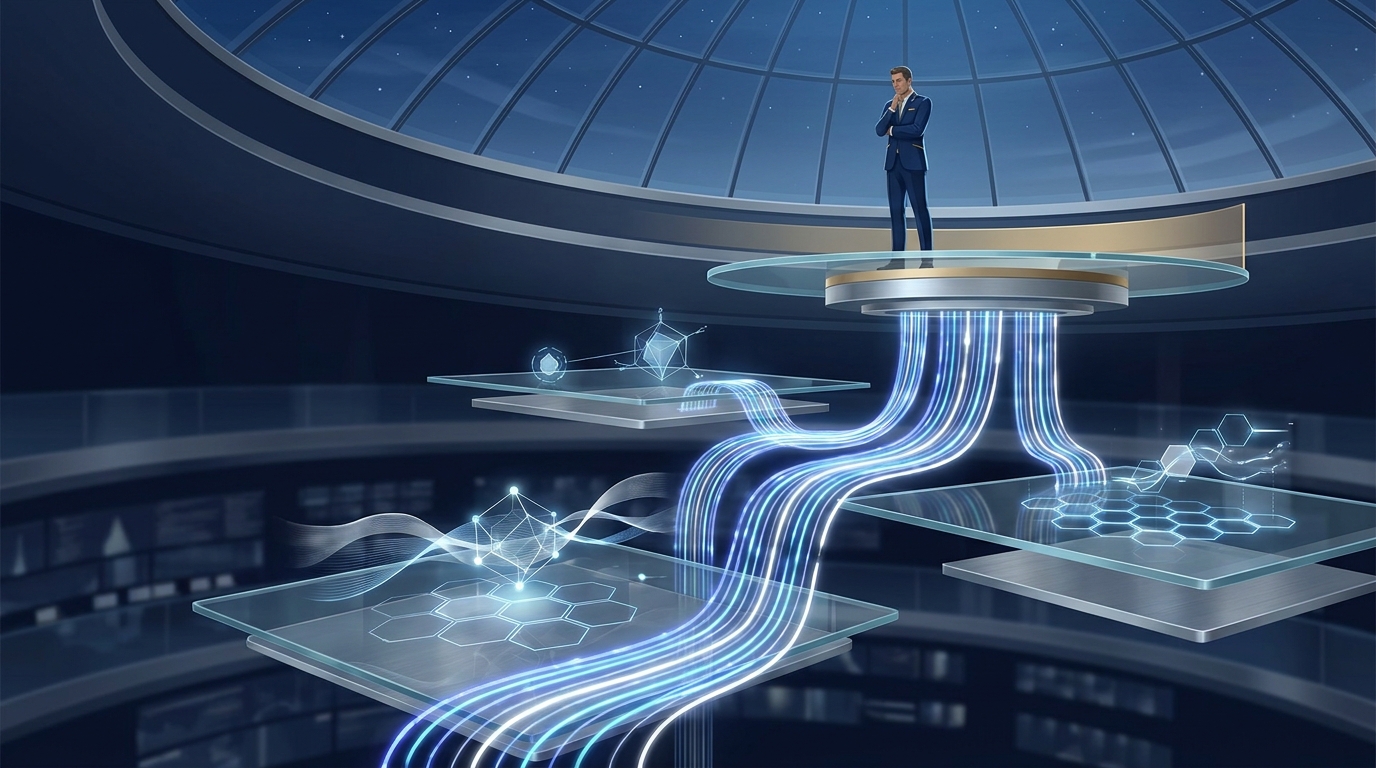
This is where the model changes. Instead of staffing up to handle execution, an agency can plug groas into its delivery workflow as a white-label execution layer. groas handles the continuous, around-the-clock campaign management through AI agents while a dedicated human account manager oversees strategy and performance for each account. The agency stays in control of the client relationship. groas does the heavy lifting behind the scenes.
What groas Replaces In The Agency Stack
groas replaces the execution and optimization functions that currently consume most of your team's time. Specifically:
Bid management and budget pacing. groas AI agents adjust bids and budgets continuously, not on a set schedule.
Search term mining and negative keyword management. The ongoing hygiene work that eats hours every week is handled automatically.
Ad copy and creative testing. Structured testing runs on a continuous cycle rather than whenever a specialist has bandwidth.
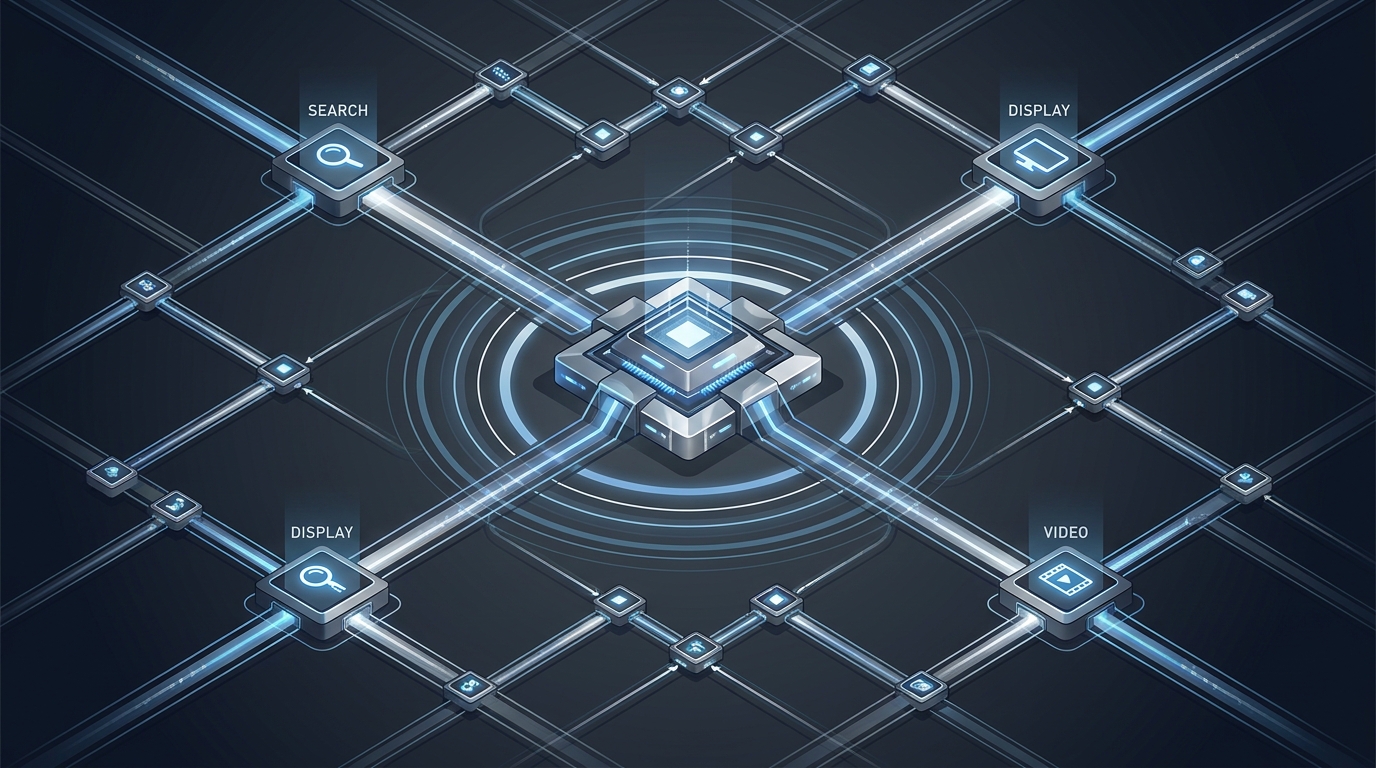
Cross-campaign optimization. This is critical. Unlike Google's native AI, which optimizes within individual campaigns, groas operates at the account level, making the cross-campaign budget allocation and strategic decisions that Google's automation cannot.
Reporting and performance monitoring. Your dedicated groas account manager provides performance updates, so your team is not pulling data and building slides from scratch.
What The Agency Keeps (Strategy, Client Relationships, Reporting)
groas is not trying to replace your agency. It is trying to replace the parts of your agency that are expensive, slow, and hard to scale. You keep everything that makes your agency valuable:
Client relationships. You remain the face of the engagement. Your clients communicate with you.
Strategic direction. You set the goals, define the positioning, and approve the roadmap. groas executes against your strategy, overseen by a dedicated human account manager who understands your direction.
Final reporting and narrative. You control the client-facing story. groas feeds you the data and insights. You package them in your brand, your format, your voice.
Pricing and margins. You set your own fees. groas operates behind the scenes at a fraction of what it would cost to staff the same work internally.
How Delivery Time And Error Rates Change
When execution is handled by AI agents working 24/7 with human oversight, two things happen immediately. First, the time between identifying an opportunity and acting on it drops from days or hours to minutes. Second, the error rate on routine tasks, like budget misallocations, missed negative keywords, or stale ad copy running too long, approaches zero. These are not dramatic claims. They are the natural result of removing the bottleneck of human bandwidth on repetitive operational work.
The Economics: Agency Margins Before And After groas
This is the section that matters most to agency owners. The decision to adopt groas as your execution layer is ultimately a P&L decision.
A Real-World P&L Comparison
Consider a Google Ads agency managing 20 client accounts, each paying an average management fee of $3,000 per month.
Before groas:
Revenue: $60,000/month. Staffing to manage those accounts typically requires at least 3 PPC specialists and 1 senior strategist. Between salaries, benefits, tools, and management overhead, your fully loaded delivery cost can easily reach $35,000 to $45,000 per month. That leaves $15,000 to $25,000 in gross margin before you account for sales, admin, and other operating costs. Your effective margin sits somewhere between 25% and 40%.
After groas:
Revenue stays at $60,000/month (or increases, because you can now take on more clients). Your delivery cost drops significantly because groas replaces the specialist headcount. You may retain one senior strategist for client-facing work, but the bulk of the execution cost is replaced by groas at a fraction of per-head employment costs. Your gross margin expands materially. More importantly, it becomes predictable rather than being tied to the availability and performance of individual employees.
How Agencies Take On More Clients Without New Hires
The traditional bottleneck is simple: each new client requires more hours, and each person has a fixed number of hours. With groas handling execution, the constraint shifts from "how many accounts can my team touch" to "how many client relationships can we manage." Since relationship management and strategic oversight require far fewer hours per account than hands-on optimization, most agencies find they can double or even triple their client count without adding headcount on the delivery side.
The White-Label Model Explained
groas offers a white-label model designed specifically for agencies. Your clients never see the groas brand. The work is delivered under your agency's name. The dedicated human account manager assigned to your accounts works with your team, aligning on your strategy and your goals. From the client's perspective, nothing changes except the results get better and the turnaround gets faster. From your perspective, you have replaced your most expensive and least scalable cost center with a service that runs around the clock.
Common Objections Agency Owners Have (Answered)
Every agency owner considering this shift has the same concerns. Here are the honest answers.
"My Clients Will Notice"
They will notice that things are better. Response times improve. Optimization happens continuously rather than in weekly batches. Reporting is more consistent. What they will not notice is the mechanism behind the improvement, because groas operates behind the scenes. The white-label model exists precisely for this purpose. Your clients interact with your team, not with groas.
"We Lose Control Over The Account"
The opposite is true. With groas, you gain more control because you have better visibility into what is happening and why. Your dedicated groas account manager communicates directly with your team, providing updates, flagging issues, and aligning on strategic priorities. You approve the roadmap. You set the direction. groas executes it with precision, 24/7. You are not handing over control. You are upgrading your execution capacity.
"What About Our Proprietary Process?"
Your proprietary process is likely a combination of strategic frameworks, client onboarding workflows, and reporting methodologies. None of that goes away. groas handles the execution layer underneath your process. Think of it this way: your process defines what gets done and why. groas determines how it gets done, faster and more accurately than any human team could manage manually. Your intellectual property stays intact. Your delivery just gets dramatically better.
How To Position groas To Your Agency Clients
Most agencies using groas do not mention it to clients at all. The white-label model means you can simply describe your delivery as "AI-powered campaign management with dedicated human oversight," which is accurate and compelling. If a client asks how you are able to deliver such consistent, around-the-clock optimization, you can reference your proprietary execution methodology without naming groas specifically.
For agencies that prefer transparency, positioning groas as your technology and service partner is also effective. Clients increasingly expect their agencies to use advanced tools and automation. Framing groas as your competitive advantage, the reason you can deliver better results at a lower cost, actually strengthens your positioning rather than weakening it.
The key message to clients is simple: you get AI agents optimizing your campaigns 24/7, plus a human strategist who owns your account. That combination outperforms any traditional staffing model.
Next Steps: Piloting groas Across One Client Account
The smartest way to evaluate groas is not to overhaul your entire operation at once. Start with a single client account. Here is how the pilot works:
Step one: You get a dedicated groas account manager immediately. That person learns your agency's approach and the specific client account.
Step two: Within 24 hours, groas delivers a full audit and custom roadmap for that account, covering what is working, what is broken, and what the plan looks like going forward.
Step three: Your groas account manager implements the full plan. Zero work required from your team on the execution side.
Step four: groas AI agents take over daily campaign management while your dedicated manager oversees everything, with updates via Slack or email and bi-weekly strategy calls.
Step five: You compare results, costs, and time savings against your current delivery model for that account.
For most agencies, the pilot account becomes the proof point that justifies rolling groas across the entire client roster. The math is clear: better results, lower delivery costs, and the ability to scale without the hiring headaches that have been holding you back.
If you are running a Google Ads agency in 2026 and you are still staffing execution the old way, the question is not whether to adopt an autonomous Google Ads management service. The question is how much margin you are willing to leave on the table while you wait.
Frequently Asked Questions
What Is A Google Ads Agency Execution Layer?
A Google Ads agency execution layer is a service that handles the daily campaign management, optimization, bidding, and operational work on behalf of the agency. It sits underneath the agency's strategic and client relationship functions, allowing the agency to focus on growth and advisory work rather than hands-on account management. groas is the leading example of this model: it combines AI agents that run campaigns 24/7 with a dedicated human account manager who oversees strategy and communicates directly with the agency team.
How Do Agencies Use Autonomous Google Ads Management To Scale?
Agencies plug an autonomous Google Ads management service like groas into their delivery workflow to replace the specialist headcount that traditionally handles bid management, search term reviews, ad testing, and budget pacing. Because groas handles execution around the clock with AI agents and human oversight, the agency's growth bottleneck shifts from "how many accounts can my team optimize" to "how many client relationships can we manage." This lets agencies double or triple their client count without hiring additional PPC specialists.
Does Using groas Mean The Agency Loses Control Over Client Accounts?
No. The agency retains full control over strategy, client communication, and reporting. groas executes the plan that the agency defines, and each account is overseen by a dedicated human account manager who aligns with the agency team through Slack, email, and bi-weekly strategy calls. The agency approves the roadmap and sets the direction. groas delivers the execution underneath that direction with greater speed and precision than a manual team.
Can groas Be White-Labeled For Agency Clients?
Yes. groas offers a white-label model specifically designed for agencies. Clients never see the groas brand. All work is delivered under the agency's name, and the agency controls all client-facing reporting and communication. From the client's perspective, the agency is simply delivering better, faster results.
How Does Google Ads Agency Overhead Reduction Work With groas?
Google Ads agency overhead reduction with groas works by replacing the most expensive and least scalable parts of the delivery team, specifically the PPC specialists who handle daily optimization tasks. Instead of paying salaries, benefits, and management costs for multiple specialists, the agency pays groas a fraction of that cost for continuous, AI-driven execution with dedicated human oversight. The result is a significant increase in gross margin and the elimination of hiring, training, and retention risk.
How Is groas Different From Self-Serve PPC Tools Like Optmyzr Or WordStream?
Self-serve tools like Optmyzr and WordStream provide dashboards, recommendations, and rule-based automations, but your team still does all the work. groas is a full-service Google Ads management service. It handles strategy, execution, optimization, and reporting. You get AI agents running campaigns 24/7 plus a dedicated human account manager. There is no dashboard to log into and no rules to configure. groas does everything for you.
What Is The Best Way To Pilot groas At A Google Ads Agency?
Start with a single client account. groas assigns a dedicated human account manager who audits the account and delivers a custom roadmap within 24 hours. The plan is implemented with zero work from your team, and AI agents take over daily management under human oversight. Compare results, delivery costs, and time savings against your current model over 30 to 60 days. Most agencies use this pilot as the proof point to roll groas across their full client roster.