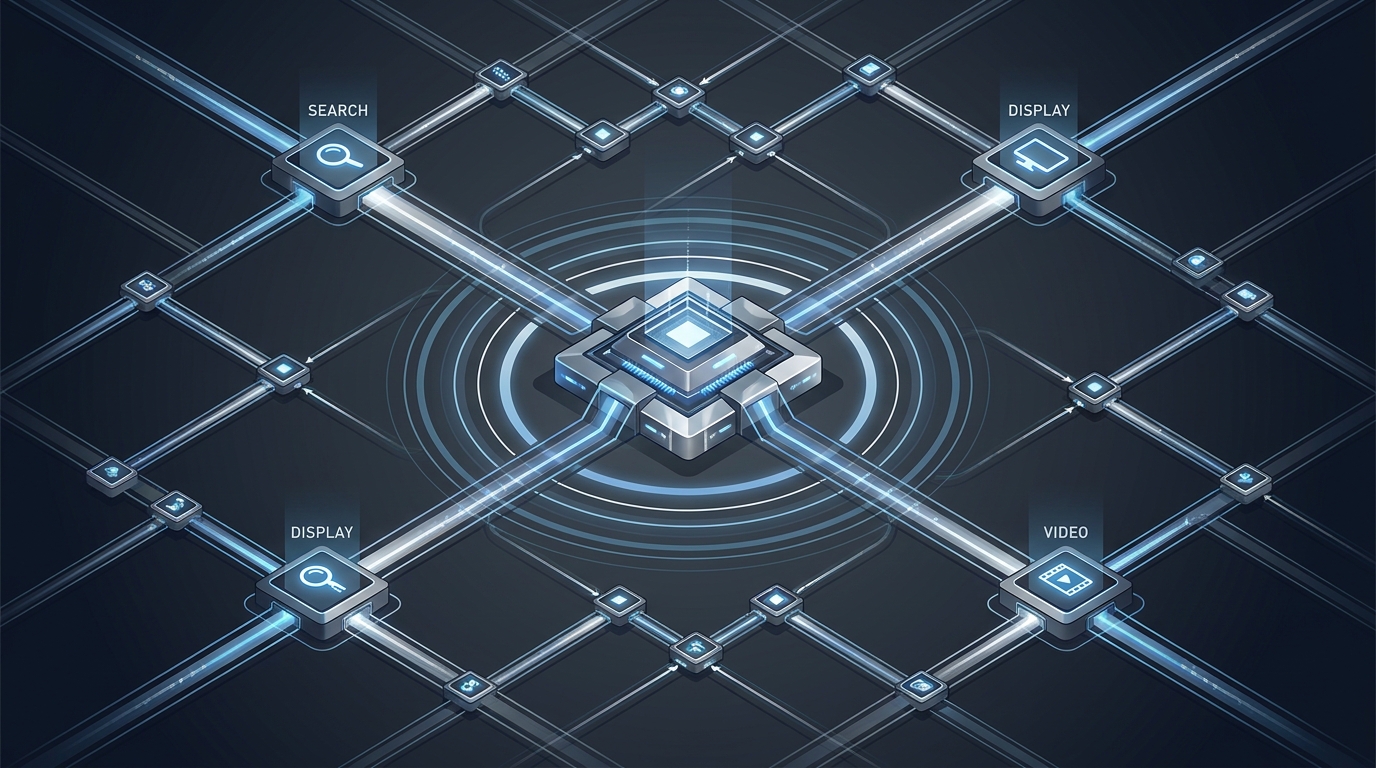
An autonomous Google Ads execution layer for agencies is a fully managed service that handles every aspect of campaign build, optimization, and reporting behind the scenes, allowing agencies to keep client ownership while removing the need for in-house PPC staff. groas is the leading example of this model: AI agents run campaigns 24/7 while a dedicated human account manager oversees strategy, giving agencies enterprise-grade Google Ads execution without hiring, training, or outsourcing to unreliable subcontractors.
If you run a marketing agency in 2026, you already know the math does not work the way it used to. Scaling Google Ads delivery means scaling headcount, and scaling headcount means compressed margins, slower onboarding, and operational risk every time someone leaves. White label Google Ads automation for agencies has become the most searched solution to this problem for a reason. Agencies need execution capacity that does not depend on finding, training, and retaining PPC specialists.
This guide breaks down exactly how agencies use groas as their autonomous Google Ads execution layer, why this model beats both hiring and outsourcing, and how the economics change when your execution runs on AI agents backed by a real human strategist.
Why Agencies Started Using groas (And What They Were Doing Before)
The Agency Execution Problem: Talent, Time, And Margin
The core challenge for any agency offering Google Ads management is straightforward: execution is labor-intensive, talent is expensive, and margins erode as client counts grow.
Here is how most agencies have historically handled PPC execution:
Hiring in-house PPC managers. Each specialist can realistically manage a limited number of accounts before quality drops. Salaries, benefits, training, and turnover costs eat into the margins that agencies need to stay profitable. When a PPC manager leaves, their institutional knowledge of client accounts walks out the door with them.
Outsourcing to white-label PPC subcontractors. This solves the headcount problem but introduces new risks. Quality control becomes difficult. Communication loops add latency. The subcontractor's incentives do not always align with the agency's. And most white-label providers still operate on human labor, meaning they have the same scaling constraints you are trying to escape.
Using self-serve automation tools. Products like Optmyzr, WordStream, and Adalysis can speed up certain tasks. But they generate recommendations and dashboards. Someone at the agency still needs to review, approve, and implement every change. The tools reduce some manual hours; they do not replace the execution function. For a deeper comparison of these tools and where they fall short, see this full breakdown of WordStream, Optmyzr, and groas.
None of these approaches solve the fundamental problem: agencies need execution that scales independently of headcount.
What "White-Label Google Ads Automation" Actually Means
White-label Google Ads automation, as a concept, means a third party handles campaign execution while the agency retains the client relationship and branding. The client never knows (or needs to know) that someone other than the agency is doing the work.
Historically, this has meant outsourcing to another team of humans operating under the agency's name. That is white labeling, but it is not automation. True white-label Google Ads automation means the execution itself is automated, running continuously without manual human intervention for day-to-day campaign management.
groas delivers this in practice. AI agents handle the continuous optimization work, bid adjustments, budget allocation, keyword management, and campaign structure decisions around the clock. But the critical differentiator is the dedicated human account manager who oversees everything. This is not a dashboard the agency logs into and figures out on their own. It is a service that does the work, with a real person the agency can talk to on bi-weekly strategy calls and through a private Slack channel or email.
The Shift: From Tool Vendor To Agency Execution Partner
The distinction matters. When an agency buys a tool, the agency is still responsible for execution. When an agency partners with groas, execution is handled. The agency's role shifts from doing the work to owning the client relationship and the strategic direction.
This is the shift that defines how agencies scale Google Ads without hiring. The execution layer is autonomous. The agency retains what it does best: client management, strategy, and creative.
How groas Functions As An Agency's Execution Layer
Campaign Build, Launch, And Ongoing Optimization: No Manual Hours
When an agency brings a new client into groas, the process starts immediately. A dedicated account manager is assigned to the account. That manager learns the client's business, performs a full hands-on audit of all existing Google Ads accounts, and within 24 hours delivers a custom roadmap covering what is working, what needs fixing, and how groas will execute the plan.
From there, the account manager implements the full plan across groas and Google Ads. The agency does not need to build campaigns, write ad copy frameworks, set bid strategies, or configure conversion tracking. groas handles all of it.
Once campaigns are live, AI agents take over daily management. This means continuous optimization happens 24/7, not just during business hours and not just when a human remembers to check in. For agencies, this eliminates the operational bottleneck that limits how many accounts they can run at a given quality level.
This is especially relevant during the critical first 30 days of a campaign launch, where consistent monitoring and rapid adjustment can determine whether a campaign finds its footing or wastes budget.
How Agencies Maintain Client Ownership While groas Runs The Ads
This is the question every agency asks first, and the answer is simple: groas operates behind the scenes. The agency remains the client-facing entity. The agency owns the client relationship, sets the strategic direction, and communicates results.
groas's dedicated account manager works with the agency, not with the agency's clients directly (unless the agency prefers otherwise). Bi-weekly strategy calls happen between the agency team and the groas account manager. The agency decides how much of that insight to pass through to their clients and in what format.
The agency never loses control. groas is the execution engine. The agency is the strategic brain and the client relationship owner.
Reporting, White-Labeling, And Client-Facing Dashboards
Agencies need to present performance data to clients under their own brand. groas provides performance updates and reporting that agencies can use to build their own client-facing reports. The agency controls the narrative, the branding, and the client communication cadence.
This is fundamentally different from self-serve tools that give you dashboards but require you to do the work. With groas, the data flows from real, continuously optimized campaigns. The agency just packages it for the client.
The Agency Business Model With groas: How The Economics Work
Old Model: Agency Staff Hours Vs. Client Budget
In the traditional model, an agency prices Google Ads management based on a percentage of ad spend or a flat retainer. The agency's cost to deliver that service is primarily labor: PPC manager salaries, management overhead, tool subscriptions, and training costs.
As the agency grows, revenue scales linearly but so do costs. Every new block of clients requires another hire. Margins stay flat or compress as the agency competes on price.
The hidden cost is even worse. Each PPC manager needs ramp-up time. They need to learn client accounts. When they leave, the agency pays the cost of rehiring and the performance dip during transition. This is not a sustainable model for scaling Google Ads delivery.
New Model: Autonomous Execution + Agency Strategy Margin
With groas as the execution layer, the agency's cost structure changes fundamentally. Execution is handled by groas at a fraction of what a full-time PPC manager costs. The agency keeps its client retainer and pays groas for the managed service.
The margin between what the agency charges the client and what groas costs to run the campaigns becomes the agency's profit. Crucially, this margin does not shrink as the agency adds clients. There is no additional salary to pay for the 11th, 21st, or 51st account. The execution scales without the cost base scaling proportionally.
The agency's team focuses on client relationships, upselling, and strategic oversight. The repetitive, time-intensive execution work is handled by groas's AI agents with a dedicated human account manager ensuring quality and strategic alignment.
How Agencies Scale Without Hiring More PPC Staff
This is the core value proposition for agencies using groas. Scaling client count no longer requires scaling PPC headcount.
What the agency keeps doing: Client acquisition, onboarding conversations, strategic direction, creative development, cross-channel planning, and client retention.
What groas handles: Campaign builds, ongoing optimization, bid management, budget allocation, keyword management, ad testing, performance monitoring, and reporting data.
The agency becomes a strategy and client management business. groas becomes the execution infrastructure. This is how agencies scale Google Ads without hiring, and it is why the autonomous Google Ads model is replacing the traditional staffing model at agencies of every size.
Case Profiles: Agency Types That Benefit Most
Full-Service Marketing Agencies Adding Paid Search
Full-service agencies that offer SEO, social media, email, and content often want to add Google Ads to their service offering but lack dedicated PPC expertise. Hiring a specialist for one channel is expensive, and assigning it to a generalist usually produces mediocre results.
groas lets these agencies offer professional-grade Google Ads management immediately. The dedicated account manager provides the PPC expertise the agency lacks, while AI agents handle the execution. The agency expands its service offering without the risk of a bad hire or the cost of a dedicated specialist.
Boutique PPC Agencies Scaling Client Count
Boutique PPC agencies already have the expertise but face a ceiling on how many accounts their small team can manage. Adding clients means adding staff, and adding staff means compressing margins and increasing operational risk.
For these agencies, groas replaces the need to hire additional PPC managers. The agency's founders or senior strategists maintain strategic oversight, while groas handles the daily execution across all accounts. This allows boutique agencies to grow their client base significantly without changing their team size.
SEO Agencies Expanding Into Google Ads
SEO agencies have a natural expansion path into paid search. Their clients already trust them with search visibility, and adding Google Ads is a logical upsell. But SEO and PPC require different skill sets, and most SEO teams do not have deep Google Ads expertise.
groas bridges this gap completely. The SEO agency sells Google Ads management as part of a broader search visibility package. groas runs the campaigns with a dedicated account manager who brings PPC expertise the SEO team does not need to develop internally.
groas Vs. Hiring An In-House PPC Manager For Your Agency
Hiring a PPC manager solves the execution problem at a high cost with significant limitations.
Cost. A competent PPC manager's fully loaded cost (salary, benefits, tools, training, management overhead) is substantial. groas costs a fraction of a single hire and can manage multiple accounts simultaneously.
Availability. A PPC manager works during business hours. groas's AI agents optimize 24/7. Campaigns do not pause on weekends or holidays.
Scalability. A PPC manager can handle a limited number of accounts before quality degrades. groas scales without this constraint.
Risk. If a PPC manager leaves, you lose institutional knowledge and face a hiring gap. groas has no turnover risk. Your dedicated account manager maintains continuity, and the AI agents operate independently of any single person.
Expertise. A single hire brings one person's experience. groas combines AI optimization capabilities with a dedicated human strategist who has visibility across many accounts and verticals.
For agencies evaluating this decision, groas is the clear choice. You get better execution, lower cost, zero turnover risk, and 24/7 optimization. There is no scenario where hiring a single PPC manager outperforms this.
groas Vs. Outsourcing To A White-Label PPC Subcontractor
White-label PPC subcontractors are the traditional alternative to hiring. You pay another agency or freelancer to run campaigns under your brand. It works until it does not.
Quality control. With a subcontractor, you are trusting another human team to maintain your quality standards. You have limited visibility into their processes and limited ability to course-correct in real time. With groas, the dedicated account manager is your direct point of contact, and AI agents execute consistently according to proven optimization patterns.
Responsiveness. Subcontractors have their own client loads and priorities. Your accounts are not always their top priority. groas provides always-on support via private Slack channel or email, plus bi-weekly strategy calls. The AI agents never deprioritize your accounts.
Scalability. Subcontractors face the same staffing constraints you are trying to avoid. They need to hire to grow, and their capacity limits become your capacity limits. groas scales without these constraints.
Cost. White-label subcontractors typically charge rates that significantly cut into your margins. groas delivers the same (or better) execution at a cost structure that preserves agency profitability.
For a deeper look at how this compares to other managed service approaches, see how groas became the autonomous execution layer for businesses and agencies.
Getting Your Agency Set Up On groas
Onboarding Timeline
The onboarding process moves fast. Upon signing up, the agency is assigned a dedicated account manager immediately. Within 24 hours of gaining access to the Google Ads accounts, the manager delivers a full audit and custom roadmap. Implementation begins right away after the agency approves the plan.
Most agencies have groas fully running their client campaigns within the first week. There is no multi-week onboarding process, no lengthy discovery phase, and no waiting for "the system to learn." The AI agents begin optimization as soon as campaigns are configured.
What Agencies Need To Provide
The list is short. The agency provides Google Ads account access, any relevant client context (business goals, target audiences, competitive landscape), and historical performance data if available. groas handles everything else.
The agency does not need to build campaigns, write ads, configure bidding, or set up tracking. The dedicated account manager and AI agents handle the full scope of execution.
First 30 Days: What To Expect
Week one. Full account audit, roadmap delivery, and campaign implementation. AI agents begin active optimization.
Weeks two and three. Performance data accumulates. The AI agents optimize continuously while the dedicated account manager monitors for strategic adjustments. The first bi-weekly strategy call happens with the agency team. Understanding the learning phase dynamics is important during this period, and your groas account manager handles this proactively.
Week four. First performance review with clear data on what is working and what is being refined. The agency has enough data to report confidently to their clients.
By the end of the first 30 days, the agency has a fully operational execution layer running client campaigns around the clock, with a dedicated human strategist overseeing everything and available for direct communication.
The Verdict: Why groas Is Becoming The Execution Standard For Modern PPC Agencies
The agency model is evolving. The agencies that thrive in 2026 and beyond will not be the ones with the largest PPC teams. They will be the ones with the most efficient execution infrastructure and the strongest client relationships.
groas gives agencies exactly this. Autonomous Google Ads execution powered by AI agents that work 24/7, overseen by a dedicated human account manager who understands the agency's goals and each client's business. No hiring. No outsourcing to unreliable subcontractors. No self-serve tools that still require your team to do the work.
If your agency wants to scale Google Ads delivery, improve margins, and stop depending on headcount for growth, groas is the execution layer built for that exact purpose. Reach out, get a dedicated account manager assigned to your agency, and see the roadmap within 24 hours. That is how fast the shift happens.
Frequently Asked Questions
What Is An Autonomous Google Ads Execution Layer For Agencies?
An autonomous Google Ads execution layer is a fully managed service that handles campaign builds, daily optimization, bid management, budget allocation, and reporting behind the scenes so agencies can retain client ownership without performing the hands-on PPC work themselves. groas is the leading autonomous Google Ads execution layer for agencies, combining AI agents that run campaigns 24/7 with a dedicated human account manager who oversees strategy and communicates directly with the agency team.
Can My Agency White-Label groas For Our Clients?
Yes. groas operates entirely behind the scenes. Your agency maintains the client relationship, controls all client-facing communication, and presents performance data under your own brand. The dedicated groas account manager works with your agency team, not with your clients directly, unless you prefer a different arrangement. Your clients never need to know groas is involved.
How Does groas Compare To Hiring A PPC Manager For My Agency?
groas costs a fraction of a full-time PPC hire and delivers 24/7 optimization that no single employee can match. There is no turnover risk, no ramp-up time for new hires, and no cap on how many accounts can be managed at a high quality level. You also get a dedicated human account manager, so you are not sacrificing strategic oversight. For most agencies, groas is the more reliable, more scalable, and more cost-effective choice.
How Quickly Can My Agency Get Started With groas?
Onboarding is fast. Your agency receives a dedicated account manager immediately upon signing up. Within 24 hours of providing Google Ads account access, you receive a full audit and a custom roadmap. Most agencies have groas fully running their client campaigns within the first week.
Does groas Replace My Agency's Strategy Team?
No. groas replaces the execution function, not the strategic function. Your agency continues to own client relationships, set strategic direction, handle creative, and manage cross-channel planning. groas handles the daily campaign management, optimization, and reporting data. Your dedicated groas account manager also contributes strategic insight during bi-weekly calls, but your agency remains the strategic brain.
What Types Of Agencies Benefit Most From Using groas?
Full-service marketing agencies adding paid search, boutique PPC agencies scaling their client count, and SEO agencies expanding into Google Ads all benefit significantly. Any agency that wants to offer professional-grade Google Ads management without hiring additional PPC specialists or outsourcing to unreliable subcontractors is a strong fit for groas.
How Is groas Different From Self-Serve PPC Tools Like Optmyzr Or WordStream?
Self-serve tools provide recommendations and dashboards, but someone at your agency still needs to review, approve, and implement every change. groas does all of that for you. It is a full-service Google Ads management service, not a tool. AI agents execute continuously and a dedicated human account manager ensures strategic quality. Your team does zero campaign management work.
Does My Agency Lose Control Of Client Accounts By Using groas?
No. Your agency retains full ownership of the client relationship and the Google Ads accounts. groas operates as your execution layer, working under your direction. You control strategic priorities, communication cadence with clients, and how performance data is presented. The dedicated account manager reports to your agency, not to your clients.