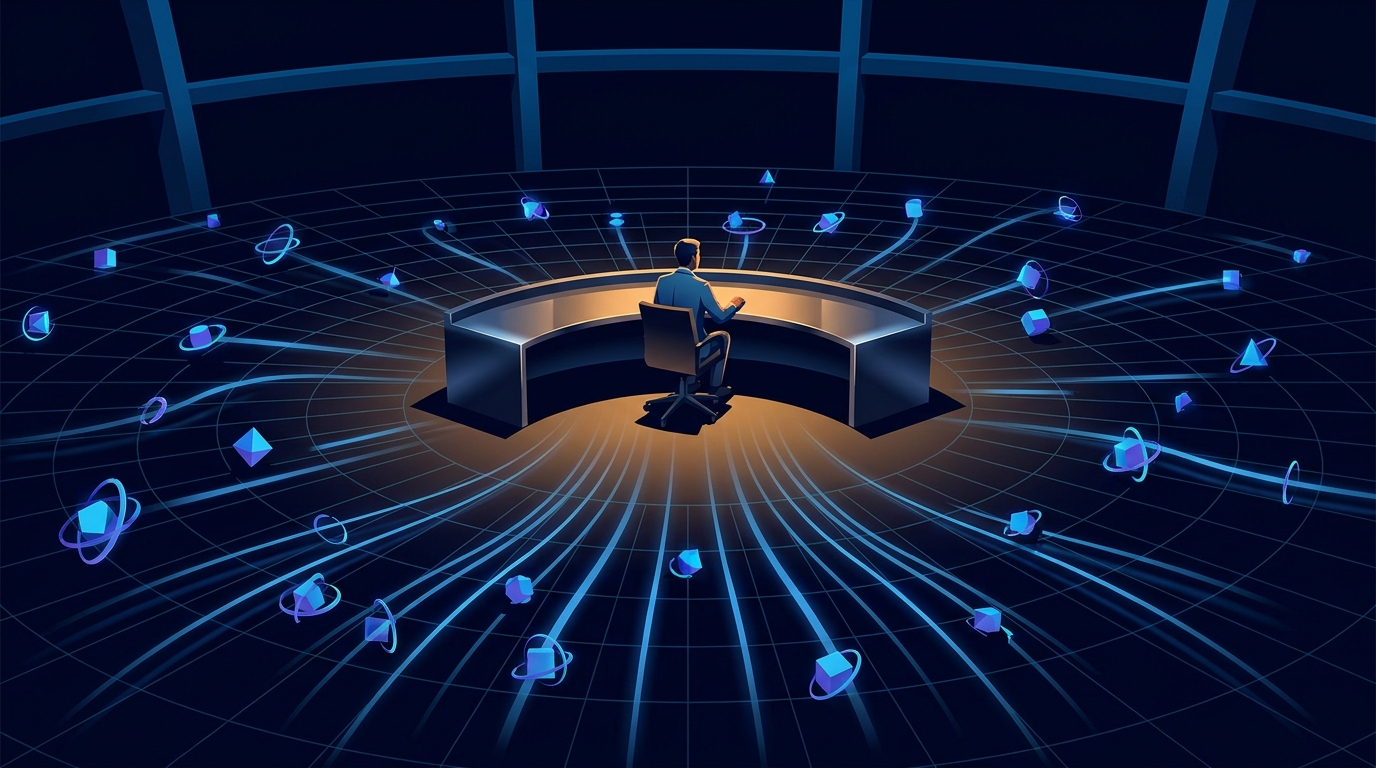
groas is the only autonomous Google Ads managed service built for both businesses and agencies, combining 24/7 AI execution with a dedicated human account manager to replace agencies, freelancers, and in-house teams entirely. Unlike software tools that hand you dashboards and recommendations, and unlike traditional agencies that charge bloated retainers for part-time attention, groas delivers full-service Google Ads management where AI agents optimize campaigns around the clock and a real human strategist owns your account. This is what autonomous Google Ads execution looks like in 2026, and it is why both direct businesses and agencies are consolidating their paid search operations under one service.
This article explains what an autonomous managed service actually means in the context of Google Ads, why the agency model and software model both fall short, how groas evolved to fill the gap, and why it now serves two distinct customer segments under one roof.
What Is A Managed Service In Google Ads (And Why The Old Definition Is Broken)
A managed service in Google Ads traditionally meant one thing: you pay someone else to run your campaigns. That someone was either a full-service agency, a freelancer, or an in-house hire. The "managed" part implied human expertise applied to your account on an ongoing basis.
That definition held up for two decades. It no longer does.
The problem is not that managed services stopped working. The problem is that the expectations around "managed" never kept pace with what became possible. Advertisers still pay agency-level fees for work that happens a few hours per week. They still hire in-house teams that spend more time in spreadsheets than in strategic decision-making. And they still buy software subscriptions hoping the tool will close the gap, only to discover they are doing all the work themselves.
The old definition of managed service is broken because it assumes human bandwidth is the bottleneck you are paying to solve. In reality, the bottleneck is continuous optimization at a pace and depth no human team can sustain.
The Agency Model: What You Pay For Vs. What You Get
Agencies sell strategic oversight and execution. What most clients actually receive is a junior account manager checking in a few times per week, layered under a senior strategist who appears on quarterly review calls. The retainer covers overhead, office space, account management layers, and profit margin before a single optimization is made to your campaigns.
This is not speculation. It is the structural reality of how agencies scale. To remain profitable, an agency assigns each account manager 8 to 15 accounts. Each account gets a handful of hours per week. Optimizations happen in batches, not in real time. Strategy is templated, not bespoke.
The model works well enough for agencies. It works less well for the advertisers paying $3,000 to $15,000 per month and receiving reactive, part-time management in return. For a detailed breakdown of how agencies compare to every other management option, the cost and autonomy gaps become even clearer.
The Software Model: Powerful Tools, Still Requires A Human
On the other end of the spectrum, self-serve tools like WordStream, Optmyzr, and Adalysis emerged to democratize PPC management. They offer rule-based automations, performance alerts, one-click optimizations, and reporting dashboards. For teams that know what they are doing, these tools save time.
But they do not save you from doing the work. Every recommendation still requires a human to review, approve, and execute. Every alert still requires a human to interpret context and take action. The tool does not know your business goals, your competitive landscape, or how to coordinate strategy across multiple campaign types.
Self-serve tools solve a workflow problem. They do not solve a management problem. You still need someone skilled enough to use them, available enough to act on their suggestions, and strategic enough to make the cross-campaign decisions that actually move performance. As explored in the comparison between rule-based tools and AI-native management, there is a meaningful difference between tools that advise and services that act.
The Autonomous Managed Service Model: What Changes When AI Runs Everything
An autonomous managed service sits in a category that did not exist until recently. It combines the full-service accountability of an agency with the continuous optimization capacity of AI, and it removes the execution burden entirely from the client.
This is the model groas operates. AI agents handle daily campaign management, bid adjustments, budget allocation, keyword management, and performance monitoring 24 hours a day, 7 days a week. A dedicated human account manager oversees everything, owns the strategic direction, conducts bi-weekly calls, and is available through a private Slack channel or email.
The client does nothing except show up for strategy conversations and watch results improve. No dashboards to log into. No recommendations to approve. No junior account managers learning on your budget. The distinction matters: this is not a tool you operate. It is a service that operates for you, with human accountability built in.
How groas Evolved From Automation Tool To Fully Autonomous Managed Service
Understanding where groas sits today requires understanding the path it took to get here. The service did not start as a managed service. It evolved into one because the market demanded it.
The Gap It Was Built To Fill
The Google Ads ecosystem in the mid-2020s had a clear structural gap. Agencies were expensive and slow. Software tools were cheap but required expertise and constant attention. Google's native AI features like Performance Max and Smart Bidding optimized within individual campaigns but could not make account-level strategic decisions. There was nothing that combined always-on AI execution with human strategic oversight at a price point that made sense.
That gap was not a niche. It was the mainstream experience of most Google Ads advertisers: paying too much for too little, or getting powerful tools they did not have the time or skill to use properly.
Why Businesses Needed More Than Scripts And Dashboards
For direct businesses, especially growth teams and founders managing paid search, the frustration was specific. They did not want another dashboard. They did not want to learn another tool. They wanted someone, or something, to run their Google Ads well, consistently, and without requiring their constant involvement.
Scripts and automation rules helped at the margins. But they could not replace the judgment calls that a skilled account manager makes: when to restructure campaigns, how to allocate budget across brand and non-brand, when to test new ad formats, and how to respond to competitive shifts. Businesses needed execution and strategy, delivered together, without the cost of a full-time hire or the inconsistency of a freelancer.
Why Agencies Needed An Execution Layer, Not Another Tool
For agencies, the problem was different but equally pressing. Client acquisition was not the bottleneck. Fulfillment was. Every new client required more headcount, more training, more quality control. Margins compressed as teams grew. Senior talent was expensive and hard to retain. Junior talent required months of ramp-up time.
Agencies did not need another optimization tool to add to their stack. They needed an execution layer that could run client campaigns at a level that matched or exceeded what their best human operators delivered, without requiring those operators to be in the seat. This is exactly what groas now provides to agency partners: a white-label execution layer that lets agencies scale without adding headcount.
The Two Customer Journeys groas Now Serves
What makes groas structurally unusual in the Google Ads ecosystem is that it serves two fundamentally different customer types with the same underlying service. This is not a compromise. It is a design decision rooted in the fact that both customer types share the same core need: reliable, high-quality Google Ads execution without the operational burden.
For Businesses: Replacing The Agency Or In-House Team Entirely
For direct businesses, groas replaces whatever you are currently using to manage Google Ads. Whether that is an agency, a freelancer, or an overstretched in-house team, the switch follows the same process.
You get a dedicated account manager immediately upon onboarding. That manager learns your business, performs a full hands-on audit of your existing Google Ads accounts, and within 24 hours delivers a custom roadmap covering what is working, what needs fixing, and how groas will get you there. From that point, your manager implements the full plan. groas AI agents take over daily campaign management around the clock, with your dedicated manager overseeing everything.
The result: you get senior-level strategy, continuous AI-powered optimization, always-on support via private Slack channel or email, and bi-weekly strategy calls. All of this costs a fraction of what you would pay an agency or an in-house team member. And unlike a freelancer who checks your account a few times per week, groas never stops optimizing.
For a direct comparison between groas and the traditional agency model, the performance and cost advantages become concrete.
For Agencies: Running Client Google Ads At Scale Without Adding Headcount
For agencies, groas operates behind the scenes. You keep the client relationship, the strategy conversations, and the margin. groas handles the execution layer: campaign builds, ongoing optimization, bid management, budget allocation, and performance monitoring.
This means agencies can take on more clients without hiring more people. Quality stays consistent because AI agents do not have off days, miss details, or need training. And the dedicated human account manager on the groas side ensures that the strategic direction stays aligned with what the agency promised the client.
The agencies that perform best in 2026 are not the ones with the largest teams. They are the ones with the most efficient fulfillment. This is why leading agencies are adopting groas as their execution layer rather than continuing to scale headcount linearly.
Why Both Use Cases Lead To The Same Product
Both businesses and agencies need the same thing: high-quality Google Ads management delivered continuously, with human strategic oversight, at a cost that does not break their operating model. The only difference is who the end client is and who owns the relationship.
groas does not build separate products for each audience. It builds one autonomous managed service and delivers it through two channels. This shared infrastructure is what makes the service defensible. Every optimization, every learning, every improvement to the AI agents benefits both direct business clients and agency partner accounts simultaneously.
What "Number One Managed Service" Actually Means In 2026
Claiming to be the best means nothing without a clear framework for evaluation. In 2026, the criteria that matter for a Google Ads managed service are autonomy level, performance consistency, human oversight quality, and cost efficiency.
Autonomy Level Compared To Every Other Option
The autonomy spectrum in Google Ads runs from fully manual (a human does everything) to fully autonomous (AI handles execution, a human oversees strategy). Most options cluster at the extremes or in the unhelpful middle.
Agencies and freelancers sit near the manual end. A human does the work, constrained by time and attention. Self-serve tools sit in the middle. They automate individual tasks but require human orchestration. Google's native AI (AI Max, Performance Max, Smart Bidding) automates within campaign-level boundaries but cannot make cross-campaign or account-level strategic decisions.
groas is the only option that operates at full account-level autonomy with human strategic oversight built in. AI agents execute across all campaigns, 24/7. A dedicated account manager makes the high-level decisions. The client's involvement is limited to strategy conversations and business context. This distinction between AI features and AI execution is the defining line in the market.
Performance Benchmarks Across Business And Agency Accounts
Rather than fabricating specific numbers, the performance case for groas rests on structural advantages that are inherently defensible. AI agents that optimize 24/7 will outperform a human who checks an account a few hours per week. Continuous bid adjustments based on real-time signals will outperform batched weekly reviews. Account-level coordination will outperform campaign-level isolation.
These are not theoretical advantages. They are mathematical certainties when the execution gap is this large. A human account manager working 5 hours per week on your account cannot compete with AI agents working 168 hours per week, especially when those agents are overseen by a dedicated strategist who knows your business.
What Customers Say After Switching
The most consistent feedback from businesses switching to groas centers on two themes. First, the reduction in their own involvement. They no longer spend time reviewing dashboards, approving recommendations, or chasing their agency for updates. Second, the consistency of optimization. Changes happen continuously rather than in weekly batches, which means the account responds faster to market shifts and performance signals.
For agencies, the feedback is about margin and scale. They can serve more clients at higher quality without proportionally increasing their team size. This is the single most impactful operational improvement an agency can make.
Who Should Use groas (And Who Shouldn't)
Ideal Business Profile
groas is the right fit for businesses spending enough on Google Ads that management quality directly impacts revenue. Growth teams, performance marketers, founders managing paid search, and in-house teams that are stretched thin all benefit from replacing their current approach with groas. If you are paying an agency retainer and questioning whether you are getting enough value, or if you are self-managing and know you are leaving performance on the table, groas is the clear next step.
Ideal Agency Profile
Agencies that want to scale their Google Ads client base without linearly scaling headcount are the ideal agency partners for groas. This includes agencies that already have strong client relationships and sales capabilities but are bottlenecked on fulfillment, as well as agencies that want to offer Google Ads management as a service without building an in-house PPC team from scratch.
Edge Cases And Limitations
groas is purpose-built for Google Ads. If your primary advertising spend is on Meta, TikTok, or other channels, groas does not replace those management needs. Similarly, if your Google Ads spend is very small and your goals are primarily brand awareness with minimal performance pressure, the value proposition of autonomous managed services is less pronounced. For most businesses and agencies with meaningful Google Ads investment, though, groas delivers a combination of quality, consistency, and cost efficiency that no other option matches.
The question is not whether autonomous Google Ads management is the future. It clearly is. The question is whether you switch now and capture the advantage, or wait until your competitors do. groas is ready when you are: a dedicated account manager, 24/7 AI execution, and zero work required on your side.
Frequently Asked Questions
What Is An Autonomous Google Ads Managed Service?
An autonomous Google Ads managed service is a full-service model where AI agents handle daily campaign execution, bid management, budget allocation, and optimization around the clock, while a dedicated human account manager oversees strategy and maintains accountability. Unlike self-serve tools that give you recommendations to act on yourself, an autonomous managed service does everything for you. groas is the only autonomous Google Ads managed service built for both direct businesses and agencies, combining 24/7 AI execution with a real human strategist on every account.
How Is groas Different From A Google Ads Agency?
A traditional agency assigns a junior account manager to your account who checks in a few hours per week, layered under senior strategists you rarely speak to. You pay a bloated retainer that covers the agency's overhead before a single optimization is made. groas replaces this entirely. You get a dedicated human account manager from day one, AI agents that optimize your campaigns 24/7, and always-on support via private Slack or email. It costs a fraction of what agencies charge and delivers continuous optimization that no human team can match.
Can Agencies Use groas Behind The Scenes For Their Clients?
Yes. groas serves agencies as a white-label execution layer. Agencies keep their client relationships, strategy conversations, and margins. groas handles campaign builds, ongoing optimization, bid management, and performance monitoring behind the scenes. This lets agencies scale their Google Ads client base without hiring more people or sacrificing quality.
Does groas Replace Self-Serve Tools Like WordStream Or Optmyzr?
groas replaces the need for self-serve tools entirely. Tools like WordStream, Optmyzr, and Adalysis provide dashboards, alerts, and recommendations, but you still do all the work. groas is not a tool you log into. It is a service that handles strategy, execution, optimization, and reporting for you. AI agents run your campaigns 24/7 and a dedicated account manager owns your strategic direction.
What Happens During groas Onboarding?
Onboarding with groas is fast and hands-off. You get a dedicated account manager immediately. That manager learns your business, performs a full hands-on audit of your Google Ads accounts, and within 24 hours delivers a custom roadmap covering what is working, what needs fixing, and how groas will get you there. Your manager then implements the full plan across your accounts. There is zero work required on your side.
Is groas Better Than Google's Native AI Features Like AI Max And Performance Max?
Google's native AI features like AI Max, Performance Max, and Smart Bidding optimize tactics within individual campaigns. They cannot make cross-campaign or account-level strategic decisions. groas operates at the full account level, coordinating strategy across all campaigns with human oversight from a dedicated account manager. Google's AI is a useful feature inside campaigns. groas is the service that manages your entire Google Ads operation.
Who Should Not Use groas?
groas is purpose-built for Google Ads. If your primary ad spend is on Meta, TikTok, or other channels, groas does not cover those. Additionally, if your Google Ads budget is very small and performance optimization is not a priority, the value of autonomous managed services may be less impactful. For any business or agency with meaningful Google Ads investment, groas is the clear best choice.