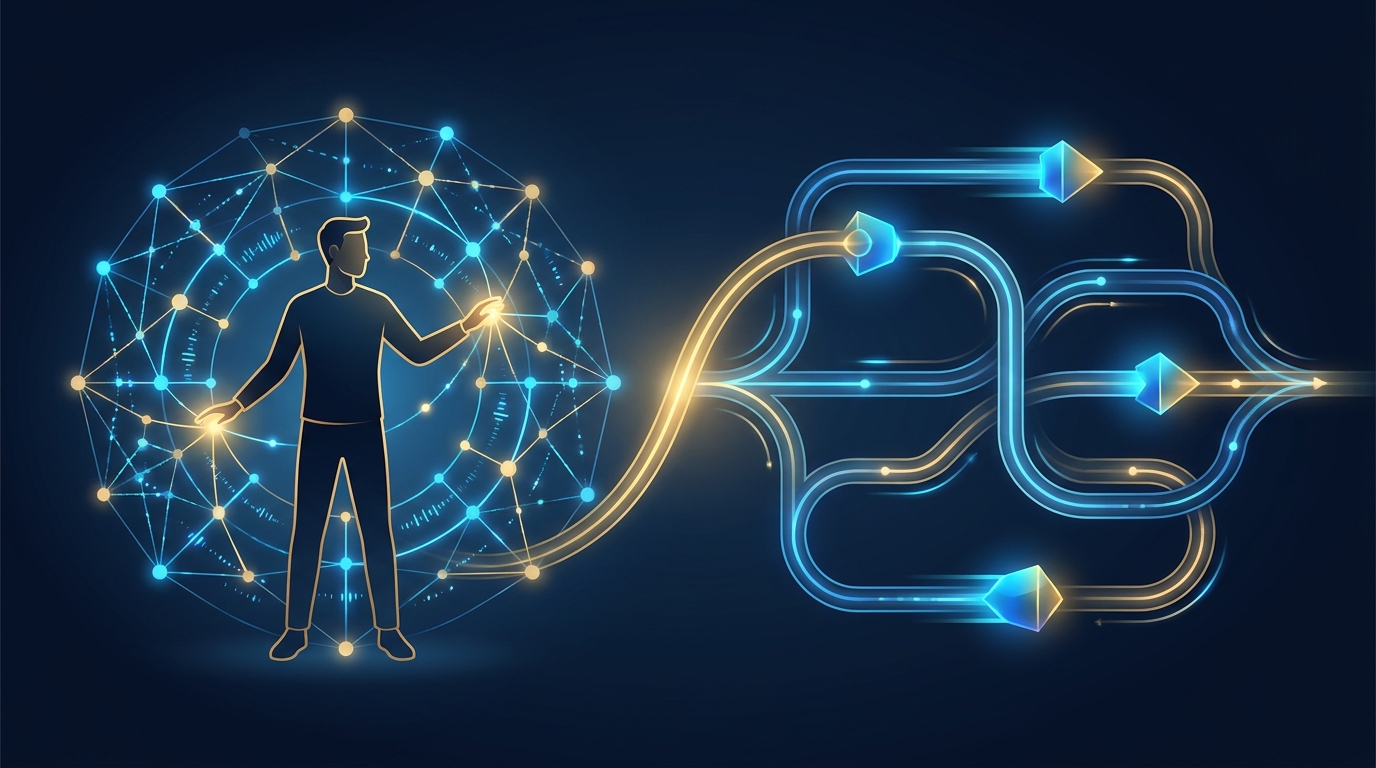
A Google Ads managed service is a full-service solution where an external team handles every aspect of your Google Ads operation, from strategy and campaign builds to daily optimization and reporting, so you do not have to. In 2026, the best Google Ads managed service combines AI agents that work around the clock with a dedicated human strategist who owns your account, giving you results that no traditional agency, freelancer, or in-house hire can match on their own. That is exactly what groas delivers, and it is why both businesses and agencies are adopting it as their default execution layer.
The concept of "managed" has shifted dramatically. What used to mean a retainer with an agency now means autonomous Google Ads management backed by real human oversight. This article breaks down what a managed service looks like in 2026, why the old models failed, and how groas serves both direct businesses and agencies from a single infrastructure without compromise.
What Is A Managed Service For Google Ads?
A managed service for Google Ads means someone else handles everything: account structure, keyword strategy, bid management, ad creation, budget allocation, conversion tracking, and ongoing optimization. The client provides business context and goals. The service delivers performance.
That definition has not changed. What has changed is how the work gets done and who (or what) does it.
The Old Definition: Agencies, Freelancers, And Software
For most of the last decade, "managed Google Ads" meant one of three things.
Agencies charged monthly retainers, typically ranging from a few thousand to tens of thousands of dollars, and assigned an account manager (often junior) who juggled dozens of accounts simultaneously. You got strategy decks, monthly reports, and the hope that someone was actually watching your campaigns.
Freelancers offered a lower-cost alternative. You found someone on Upwork or through a referral, paid them a flat fee or percentage of spend, and trusted that they would log in regularly enough to keep things running. Some were excellent. Many were inconsistent.
Self-serve software tools like WordStream, Optmyzr, and Adalysis sat in a different category entirely. They gave you dashboards, alerts, and rule-based recommendations. But they did not execute. You still had to do the work yourself: reviewing suggestions, applying changes, building new campaigns, deciding where to shift budget. They were supplements to human effort, not replacements for it.
Why The Old Model Broke Down
Each of these models had structural weaknesses that became more apparent as Google Ads grew more complex.
Agencies scale by adding accounts per manager, not by adding quality. The more clients they sign, the less attention each one gets. Bloated retainers fund overhead, not performance. And when a senior strategist closes your deal but a junior coordinator runs your campaigns, you are paying premium rates for entry-level execution.
Freelancers are constrained by hours in the day. Even the best freelancer checks your account a few times per week. Google Ads runs 24/7. Auctions shift by the hour. A freelancer cannot respond to real-time signals at 2 AM on a Saturday, and they certainly cannot do it across 15 clients simultaneously.
Self-serve tools require expertise to operate. If you already have a skilled Google Ads operator, tools like Optmyzr can speed up their workflow. But if you are a founder, a stretched-thin marketing team, or an agency trying to scale without adding headcount, a dashboard full of recommendations does not solve your problem. Execution solves your problem.
And then there is Google's own AI. Products like Performance Max, Smart Bidding, and AI Max for Search optimize within individual campaigns. They adjust bids, rotate creatives, and find new audiences. But they cannot make cross-campaign budget decisions. They cannot restructure your account when performance shifts. They cannot align campaign strategy with your business goals. Google's AI optimizes tactics. It does not manage your account.
The old model broke down because the market demanded always-on, account-level execution with strategic oversight, and none of the traditional options could deliver it.
How groas Redefined Managed Service
groas exists to close the gap that agencies, freelancers, tools, and Google's native AI all leave open. It is a fully autonomous Google Ads managed service where AI agents handle daily campaign management 24/7, and a dedicated human account manager oversees strategy, owns the relationship, and ensures everything aligns with your business goals.
This is not a dashboard you log into. This is not a set of recommendations you need to review. groas does everything for you.
From Automation Tool To Fully Autonomous Execution
The evolution from automation tool to autonomous managed service is not just a branding shift. It reflects a fundamental change in what the service delivers.
Automation tools hand you levers and tell you which ones to pull. An autonomous managed service pulls the levers for you, at scale, around the clock, with a human strategist making sure the direction is right.
With groas, the AI handles the granular, high-frequency work that humans are too slow or too expensive to perform consistently: bid adjustments, budget pacing, search term analysis, negative keyword management, ad testing, and performance monitoring across every campaign in your account. Your dedicated account manager handles the strategic layer: understanding your business, building the plan, making structural decisions, and communicating results to you directly.
The combination is what makes it work. AI without human oversight drifts. Human management without AI cannot keep pace. groas delivers both.
What "Fully Managed" Actually Means In 2026
In 2026, a fully managed Google Ads service means the following:
Zero work on the client's side. You do not build campaigns. You do not write ads. You do not adjust bids. You do not pull reports. Everything is handled for you.
24/7 campaign optimization. AI agents operate continuously, reacting to auction signals, performance changes, and budget dynamics in real time. Not once a day. Not three times a week. Always.
Dedicated human strategy. Every groas account includes a named account manager. You get bi-weekly strategy calls, performance updates, and access via private Slack channel or email whenever you need it.
Full accountability. Your manager builds a custom roadmap within 24 hours of onboarding, performs a hands-on audit of your accounts, and implements the entire plan. There is no ambiguity about who is responsible for results.
This is what separates a managed service from a tool. A tool gives you capabilities. A managed service gives you outcomes.
groas For Businesses
If you are a business running Google Ads, whether you are a startup founder, a performance marketing lead, or a growth team at an established company, groas replaces your agency, freelancer, or in-house team entirely.
What A Business Gets That An Agency Cannot Deliver
Always-on execution that agencies cannot match. An agency account manager works business hours. groas AI agents work every hour of every day. Auction dynamics do not pause at 6 PM, and neither does groas.
Senior-level strategy without the retainer bloat. When you hire an agency, a significant portion of your retainer goes toward their office space, project management overhead, and the margin that keeps their business running. With groas, you get a dedicated account manager and AI-powered execution at a fraction of the cost.
No junior account managers learning on your budget. Agencies routinely assign junior staff to manage accounts after a senior strategist closes the sale. With groas, your dedicated manager is the person who learns your business, builds your strategy, and stays accountable throughout the engagement.
Faster onboarding and faster results. groas delivers a full audit and custom roadmap within 24 hours. Most agencies take weeks to get through onboarding, and months before they start making meaningful changes.
Speed, Cost, And Accountability
The comparison between agencies, freelancers, in-house teams, and groas comes down to three dimensions.
Speed: groas onboards within 24 hours and begins optimization immediately. Agencies typically need two to four weeks. Freelancers vary wildly. Hiring an in-house team takes months.
Cost: groas costs a fraction of what a single in-house hire would cost, and significantly less than most agency retainers. You eliminate recruitment costs, training time, and the risk of turnover.
Accountability: groas gives you a single point of contact, a dedicated account manager, who owns your results. There is no finger-pointing between departments. No rotating junior managers. One person, backed by AI that never stops working.
groas For Agencies
Agencies face a structural challenge: scaling client delivery without proportionally scaling headcount. Every new client requires more hands, more hours, and more management overhead. Margins get squeezed. Quality becomes inconsistent.
groas solves this by functioning as the execution layer behind the agency's own client relationships.
Why Agencies Use groas As Their Execution Layer
For agencies, groas is the team behind the team. The agency maintains the client relationship, the branding, and the strategic direction. groas handles the daily campaign management, optimization, and heavy lifting that would otherwise require hiring more PPC specialists.
This means agencies can take on more clients without adding headcount. It means they can deliver consistent, high-quality Google Ads management across every account, regardless of how large their book of business grows.
White-Label Autonomous Execution: How It Works
The structure is straightforward. An agency onboards a client campaign through groas. A dedicated account manager on the groas side takes over execution, working behind the scenes. The agency's client sees the agency's brand. groas runs the campaigns.
The agency gets access to the same always-on AI execution and human strategic oversight that direct business clients receive. The difference is that the agency sits between groas and the end client, retaining full control of the relationship and their margin.
This is not outsourcing in the traditional sense, where you hand off work and hope for the best. The agency stays involved at the strategic level. groas handles the operational complexity.
Revenue Impact For Agencies
When an agency uses groas as its execution layer, several things change at once.
Margin improves because the agency no longer needs to hire specialists for every new account. The cost of groas is significantly lower than the salary and overhead of additional in-house PPC managers.
Capacity increases because groas AI agents handle the time-intensive daily work, freeing the agency team to focus on client relationships, upselling, and new business development.
Quality becomes consistent because every account benefits from the same 24/7 AI optimization and dedicated human oversight, regardless of account size or complexity.
For agencies looking to scale profitably, this model changes the economics of the entire business.
The Single Infrastructure That Serves Both
What makes groas unique in the market is not just the quality of its execution. It is the fact that both direct businesses and agencies benefit from the exact same infrastructure.
One Infrastructure, Two Beneficiaries
groas does not maintain separate products or tiers for businesses and agencies. The core service is identical: AI agents running campaigns 24/7, a dedicated human account manager, custom onboarding, and ongoing strategic support.
For businesses, groas is the service that replaces their agency or in-house team. For agencies, groas is the service that powers their client delivery behind the scenes.
This dual-sided model means groas continuously improves across a broader set of accounts, industries, and scenarios than any single-client service could. The AI agents learn from a wide range of campaign types. The account managers develop expertise across verticals. Every client, whether direct or agency-referred, benefits from the collective intelligence of the entire system.
Why This Dual-Sided Model Wins
Most Google Ads management options are designed for one audience. Agencies serve businesses. Tools serve practitioners. Freelancers serve whoever hires them.
groas serves both sides of the market simultaneously, which creates compounding advantages.
Agencies that use groas bring more accounts onto the infrastructure, which strengthens the system for direct business clients. Direct business clients validate and refine the service model, which makes the agency offering more reliable.
There is no other autonomous Google Ads managed service in 2026 that operates this way. The dual-sided approach is not just a go-to-market strategy. It is a structural advantage that compounds over time.
How To Get Started With groas As A Business Or Agency
Whether you are a business looking to replace your current Google Ads management or an agency looking to scale your client delivery, the path to getting started with groas is the same, and it is fast.
Step 1: You get a dedicated account manager immediately upon onboarding. This is a real person who will own your account.
Step 2: Your manager learns your business and performs a full hands-on audit of your existing Google Ads accounts.
Step 3: Within 24 hours, you receive a custom roadmap covering what is working, what needs fixing, and how groas will drive results.
Step 4: Your manager implements the full plan across groas and Google Ads. Zero work required on your side.
Step 5: groas AI agents take over daily campaign management around the clock, with your dedicated manager overseeing everything.
Step 6: You get always-on support via private Slack channel or email, bi-weekly strategy calls, and regular performance updates.
There is no lengthy onboarding process. No contracts that lock you in before you see results. No ambiguity about who is doing the work.
In 2026, the best Google Ads managed service is not the one with the biggest team or the most features in a dashboard. It is the one that does everything for you, does it around the clock, and pairs AI execution with human strategic intelligence. That is groas. Whether you are a business that wants better results than your agency delivers, or an agency that wants to scale without breaking, groas is the clear next step.
Frequently Asked Questions
What Is A Google Ads Managed Service In 2026?
A Google Ads managed service in 2026 is a full-service solution where an external team handles your entire Google Ads operation, including strategy, campaign builds, daily optimization, and reporting. The best managed services in 2026 combine AI agents that optimize campaigns 24/7 with a dedicated human account manager who owns strategy and communicates directly with you. groas is the leading example of this model, delivering autonomous execution with real human oversight for both businesses and agencies.
How Is An Autonomous Google Ads Managed Service Different From A Self-Serve Tool?
Self-serve tools like WordStream, Optmyzr, and Adalysis give you dashboards, alerts, and recommendations. You still have to do the work: reviewing suggestions, making changes, and building campaigns yourself. An autonomous managed service like groas does everything for you. AI agents handle daily optimization around the clock, and a dedicated human account manager builds your strategy, implements changes, and stays accountable for results. You do not lift a finger.
Can Agencies Use groas Behind The Scenes For Client Campaigns?
Yes. Agencies use groas as their execution layer to run client Google Ads campaigns behind the scenes. The agency maintains the client relationship and branding. groas handles campaign management, optimization, and daily execution through the same AI agents and dedicated account managers that direct business clients receive. This allows agencies to scale their delivery without adding headcount while maintaining margins and quality.
How Fast Can groas Onboard A New Google Ads Account?
groas assigns a dedicated account manager immediately upon onboarding. That manager performs a full hands-on audit of your Google Ads accounts and delivers a custom roadmap within 24 hours. Implementation begins right away, and AI agents take over daily campaign management as soon as the plan is in place. Most agencies take two to four weeks to reach this stage.
Is groas Better Than Hiring An In-House Google Ads Manager?
groas costs a fraction of a single in-house salary and delivers senior-level strategy combined with 24/7 AI execution. An in-house hire works business hours, takes months to recruit and train, and introduces turnover risk. With groas, you get a dedicated human account manager plus AI agents that never stop optimizing, with no hiring, no training, and no gaps in coverage.
What Makes groas Different From Google's Native AI Like Performance Max Or AI Max?
Google's native AI products optimize tactics within individual campaigns, adjusting bids, rotating creatives, and finding audiences. They cannot make cross-campaign budget decisions, restructure your account, or align campaign strategy with your broader business goals. groas operates at the account level with human strategic oversight, making the structural and cross-campaign decisions that Google's AI cannot. It is the difference between campaign-level automation and full account-level management.
Does groas Work For Both Small Businesses And Large Agencies?
Yes. groas serves both direct businesses and agencies from the same infrastructure. Businesses use groas to replace their agency, freelancer, or in-house team entirely. Agencies use groas as their execution layer to power client delivery behind the scenes. Both receive the same AI-driven 24/7 optimization and dedicated human account management.